How to Freeze Garlic

Learn how to freeze garlic for convenient use, so you can add frozen garlic directly to your favorite recipes. If you're looking for an easy way to preserve garlic, my tutorial will give you a quick way to do it!
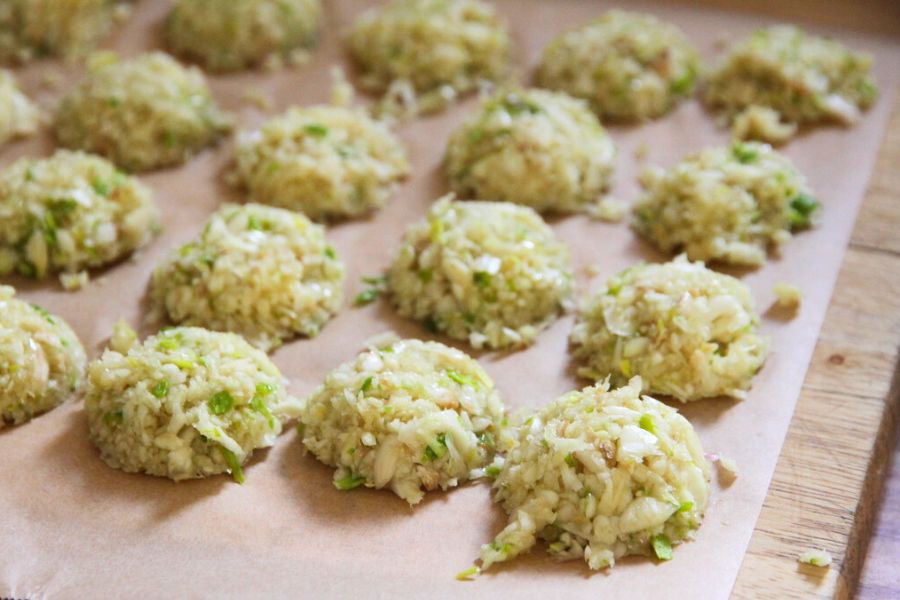
Garlic is one of those things I must have in my kitchen. So when spring arrives and my homegrown garlic begins to sprout, I have to preserve it.
I use garlic cloves to make this fermented garlic recipe, and I also preserve garlic in vinegar. But I really love freezing garlic!
If you don't like dealing with garlic while cooking, you'll love freezing garlic in the manner I'm going to outline for you now!
Why You'll Love Freezing Garlic
I plant hardneck garlic in my gardens every year. After harvesting and curing garlic, I like to store it in baskets in the cold room. I also like stringing garlic, so I can hang it in the kitchen for easy access (and pretty farmhouse kitchen decor!).
Regardless of where I store whole garlic cloves, they always sprout in the spring.
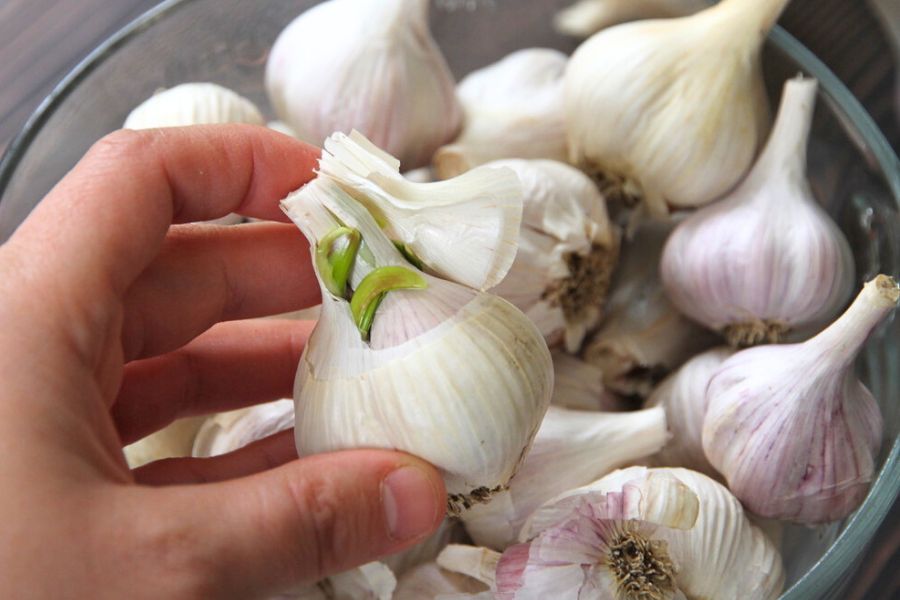
Because I like keeping my homegrown garlic on hand until the new crop comes in, I have to preserve it.
And actually, there are lots of reasons to preserve garlic in your kitchen!
Here's a few of them:
- Preserving garlic is a great way to avoid food waste.
- It helps save money, especially if you are buying quality garlic.
- Some preserving methods make garlic easier to use in cooking.
- When freezing garlic, you do all the work upfront, and won't have to hassle with peeling, pressing or mincing garlic over the upcoming months!
Here is one of my favorite ways to quickly preserve a lot of fresh garlic.
List of Tools
- Kitchen blender or food processor
- Sheet pan
- Parchment paper
- 1 tablespoon
- snack-sized ziploc bags
Watch the Video Tutorial!
How to Freeze Garlic the Easy Way
Step 1: Peel Whole Heads of Garlic
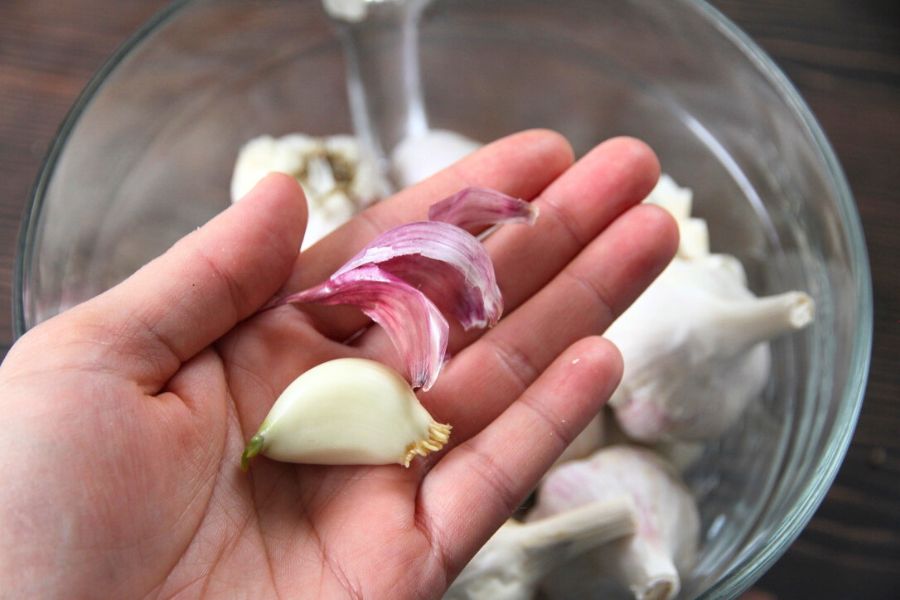
Take several heads of garlic and remove the outer papery peel. Separate the individual cloves, peeling each one. I like to toss mine into a small kitchen bowl as I go.
Step 2: Mince Peeled Garlic Cloves
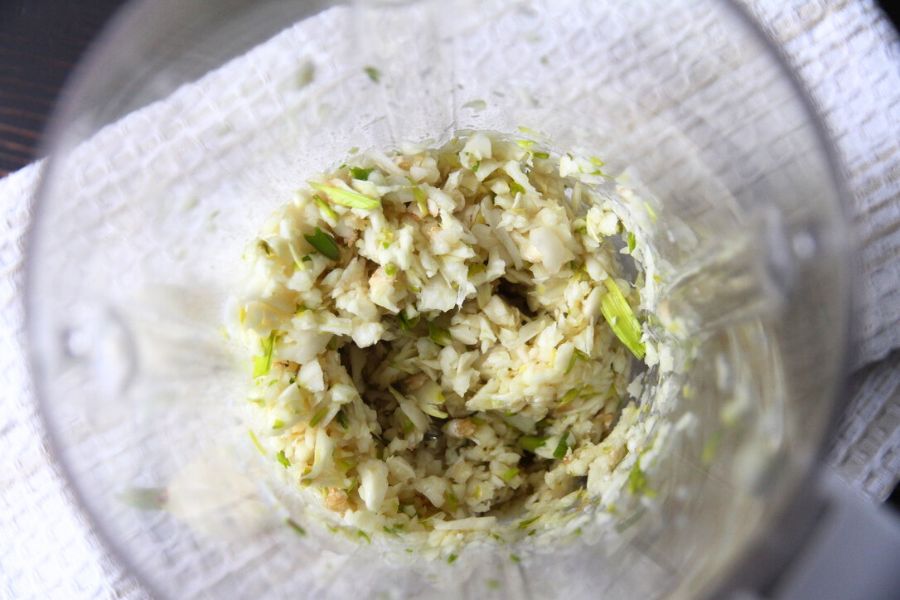
When you've peel all the garlic, go ahead and mince it. You can use a knife and cutting board, or quickly send it through a kitchen blender or food processor, until you have lightly chopped raw garlic.
Helpful tip: if you work fresh garlic for too long in a kitchen appliance, you'll get garlic puree or paste instead. Pulse the blender 8-10 times, or until you have roughly chopped garlic, as pictured below.
Step 3: Line a Baking Sheet with Parchment Paper
Because you are going to flash freeze your garlic, go ahead and line a baking sheet with parchment paper. This makes it easy to lift frozen garlic patties.
Step 4: Use a Tablespoon to form Garlic Patties
In my kitchen, I like freezing garlic in tablespoon size patties. But if you don't use a lot of garlic, you may want to use a teaspoon.
Scoop up some minced garlic, using your tablespoon or teaspoon.
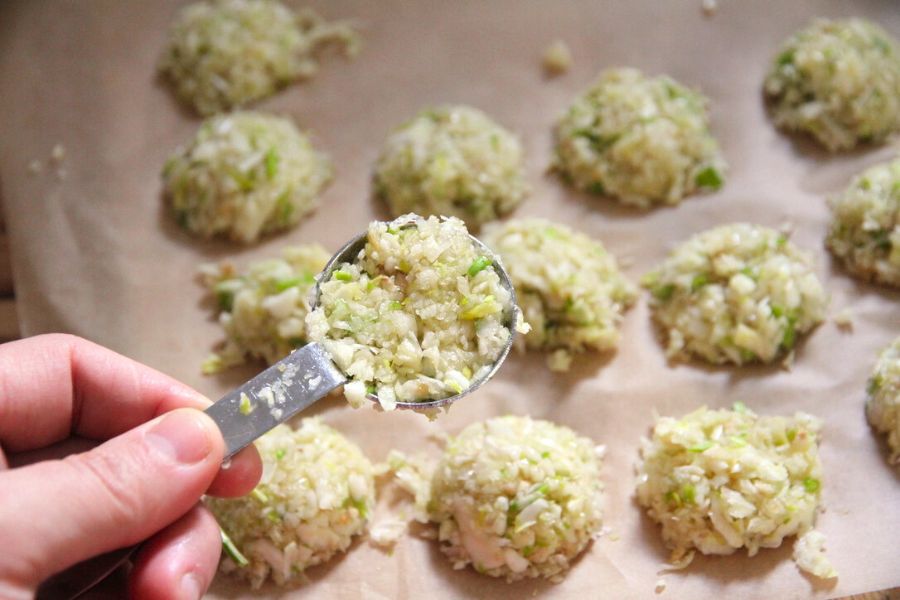
Gently pat garlic down into the tablespoon, then tap it out onto the parchment-lined baking sheet. Repeat, until garlic is used up.
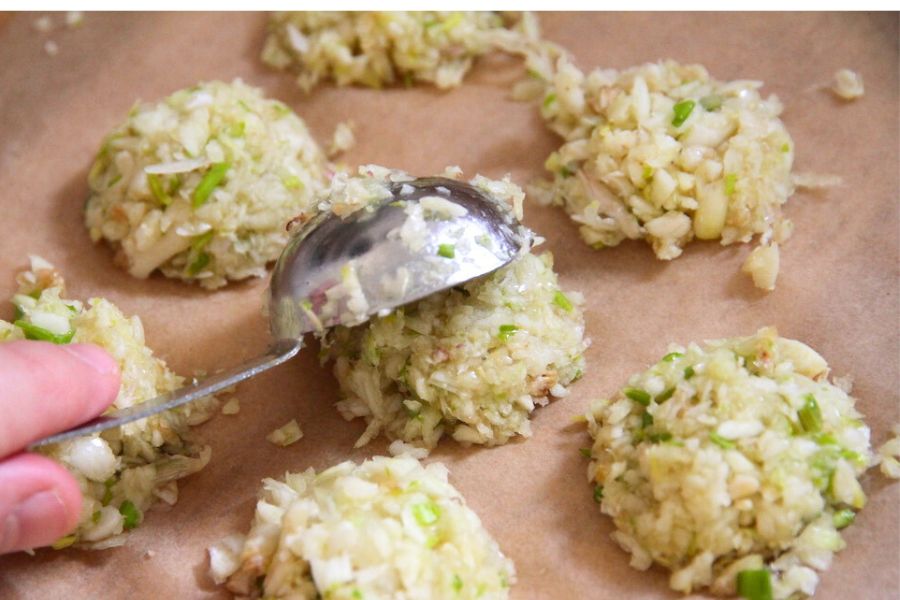
Step 5: Flash Freeze Minced Garlic
Put the entire baking sheet into the freezer and leave it for several hours, until garlic has frozen solid.
Yes, raw garlic freezes beautifully, so you don't have to worry about spoiling the flavor!
Step 6: Bag Frozen Garlic Patties and Store in Freezer
Once your garlic patties are frozen solid, lift the mounds and put them plastic zip loc bags. I like to use small freezer bags for this, but you can also use glass freezer containers, if you don't like using plastic.
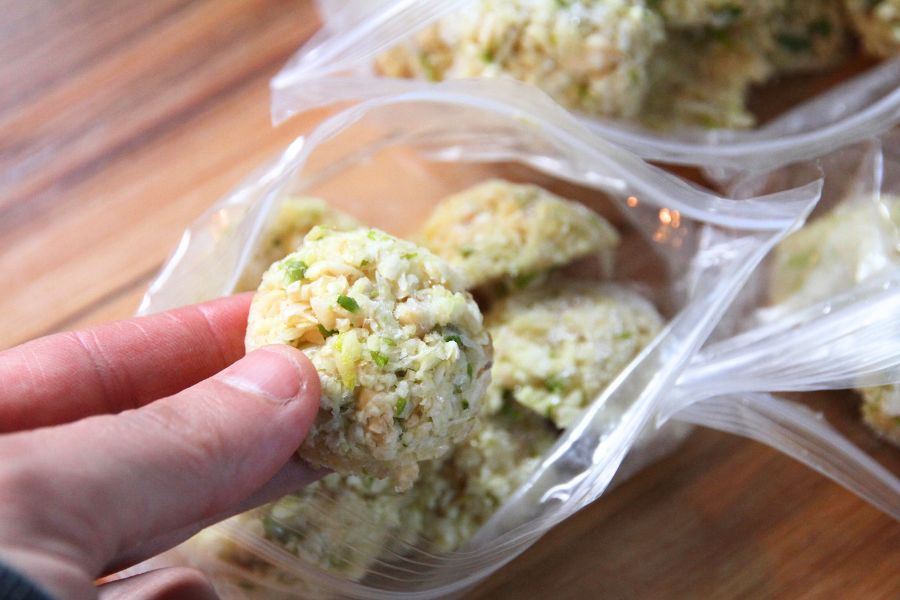
It's always a good idea to label your freezer garlic for easy identification.
Step 7: Use Like Fresh Garlic in Your Favorite Recipes
You can use frozen garlic just like you do fresh stuff. When cooking your favorite recipes, just pull a pat of garlic out of the freezer pop it into your recipe! But you don't have to cook it.
You can use it in raw form as well in your homemade condiments and salad dressings.
You've already measured it, so you know exactly how much garlic you're using (1 tablespoon!).
Read more about garlic here:
How to Plant and Grow Your Own Garlic
How to String Hardneck Garlic Bulbs for a Braided Look
How to Preserve Garlic in Apple Cider Vinegar
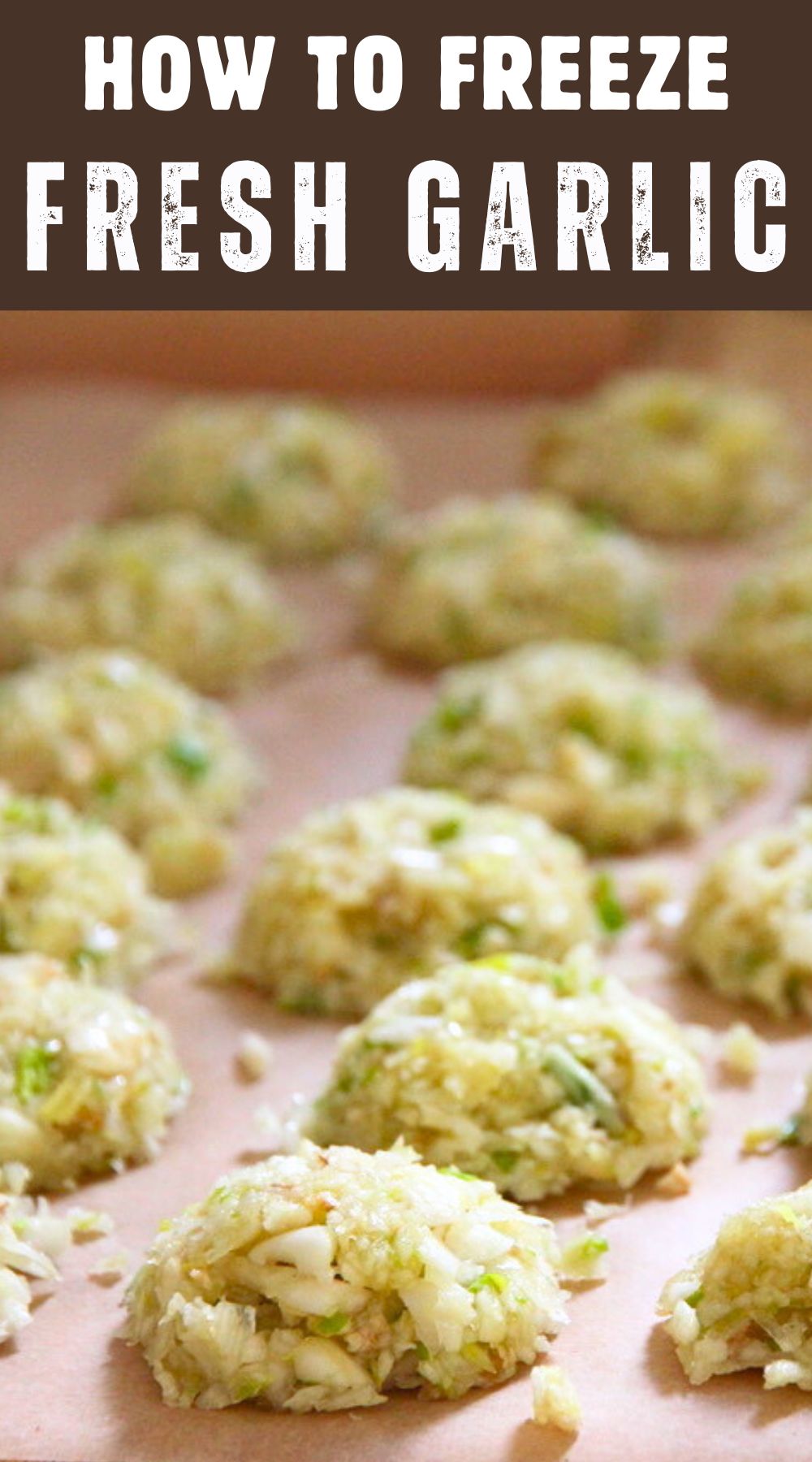

How to Freeze Garlic
Equipment
- kitchen blender or food processor
- 1 large sheet pan
- 1 roll parchment paper
- 1 tablespoon
- a few small ziploc bags
Materials
- 6+ heads fresh garlic
Instructions
- Peel paper from garlic bulbs and remove whole cloves.
- Peel every clove and pop it into your kitchen blender or food processor.
- Pulse the machine, until garlic is looks minced.
- Line your baking sheet with parchment paper.
- Scoop garlic out with the tablespoon and level.
- Lightly pack the minced garlic down and tap out onto parchment paper.
- Repeat until garlic is used up.
- Place the entire garlic-lined baking sheet in the freezer.
- Freeze until garlic is solid.
- Remove the frozen, molded garlic and pop into freezer bags.
- Use frozen garlic in your cooking, just like you would fresh stuff.

Did you leave the end opposite of the green stem on (the one that looks like roots).
Yes, I leave it intact. If the rooting end isn't crusty and hard, you won't notice it after mincing (or blending) and freezing the garlic.