How to Clean Up and Care for Your Asparagus Beds

It might not be fun to clean up your asparagus bed (or beds) in late fall or early spring, but it is important for the health of your asparagus plants. This is especially true for those of us who practice organic gardening!
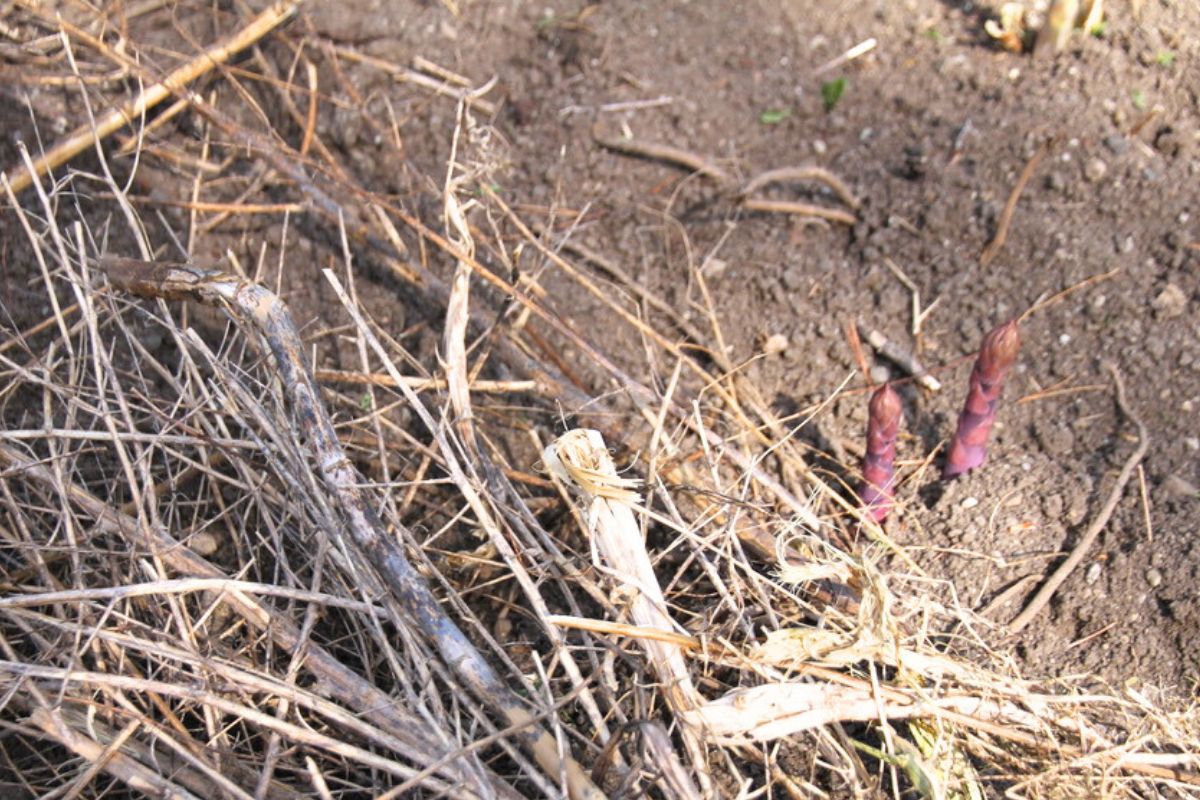
Asparagus is one of those delightful vegetables that appear in early spring with your first cold-weather greens (or even before).
The fresh spears are a foretaste of what is to come from the garden, and I eagerly look for them every spring.
But then late summer comes, and I find myself questioning whether or not asparagus is worth growing in the garden.
It's not difficult to plant asparagus crowns or harvest asparagus spears. And fall cleanup isn't that difficult either!
What bothers me at times?
I could have grown sacks of potatoes, several dozen tomato plants or piles of green beans in those garden beds!
I hum. I haw. I contemplate quitting asparagus at the end of gardening season.
And then I clean up my beds.
Proper cleanup after asparagus ferns have died in the fall is crucial when you practice organic gardening techniques.
Cutting back dead foliage is important, especially if you have problems with the asparagus beetle.
A few inches of compost will ensure the deeply buried roots have nourishment they need to remain healthy, and a layer of straw mulch protects the soil from winter.
When spring comes once again, I'm reminded why this perennial vegetable has stood the test of time!
The early arrival of asparagus combined with the fresh flavor reminds me that it is indeed worth the effort.
Here's how you clean up and care for asparagus beds, so you can safely overwinter the crowns and maximize your harvest yields.
3 Basic Needs of Asparagus
Taking care of asparagus isn't complicated. Most garden perennials-like rhubarb and horseradish-are quite forgiving, but asparagus takes a bit more effort.
Here are the 3 basic needs of asparagus.
- Keep the bed free of annual weeds and perennial weeds alike; asparagus doesn't like competition.
- As a heavy feeder, asparagus needs organic matter added to the garden bed every 1-2 years.
- Asparagus ferns die in the fall and should be removed, or you'll run the risk of getting disease or pests that will hinder next year's crop.
Best Tools for Cleanup & Care
- pruning shears
- wheelbarrow
- pitchfork for loosening soil
- organic composted matter
- organic straw bales (for mulch)
How to Clean Up and Care for Asparagus Garden Beds
You can clean up and feed your asparagus beds in late fall or early spring.
I think the best time is late fall, so the beds are ready for new growth the following spring. Otherwise, the first asparagus spears of the year will likely catch you by surprise (I speak from experience here!).
If you do miss fall cleanup, you can deal with your asparagus beds in late winter or first thing in the spring. For best results, you'll want to tackle this job as soon as the ground has thawed.
Step 1-Remove Dead Asparagus Ferns
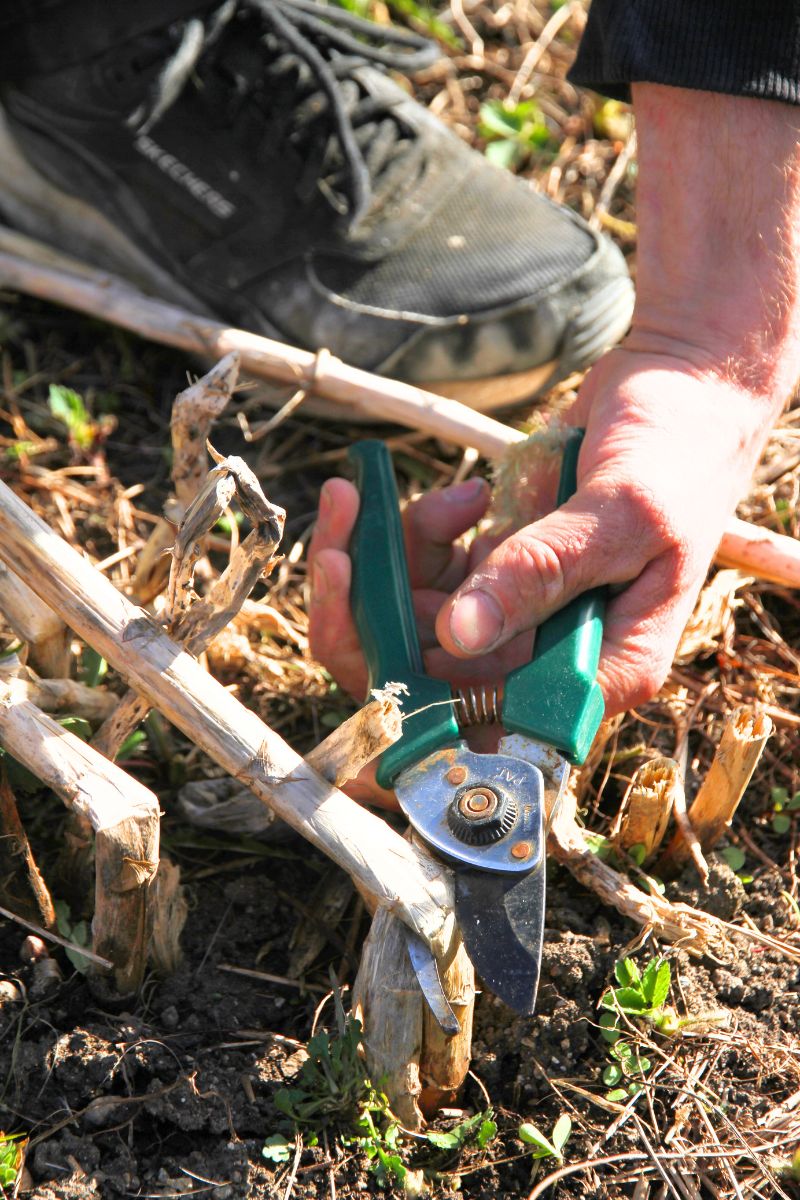
It doesn't matter if you have a young asparagus patch or a mature bed. Dead foliage should be removed before new spears appear. Ideally, this would be done at the end of the harvest season, after asparagus ferns turn yellow and die back.
You can use pruning shears to cut the old stalks off at ground level. Pile them in a wheel barrow, and haul them far away from your patch!
If you suspect pests or saw any sign of disease in your asparagus beds, go ahead and burn the dried fern stalks.
Step 2-Weed Your Asparagus Rows
Asparagus doesn't like competing for nutrients, so weed management is important. Mulch helps immensely, but there are always a few weeds that manage to push through. You'll want to pull these invaders before adding organic matter to your beds.
Most home gardeners find that hand removal is best, because it leaves asparagus roots undisturbed. You can use a pitchfork or broadfork to gently loosen the soil in your bed, so it's easy to pull out perennial weeds and self-seeding annuals.
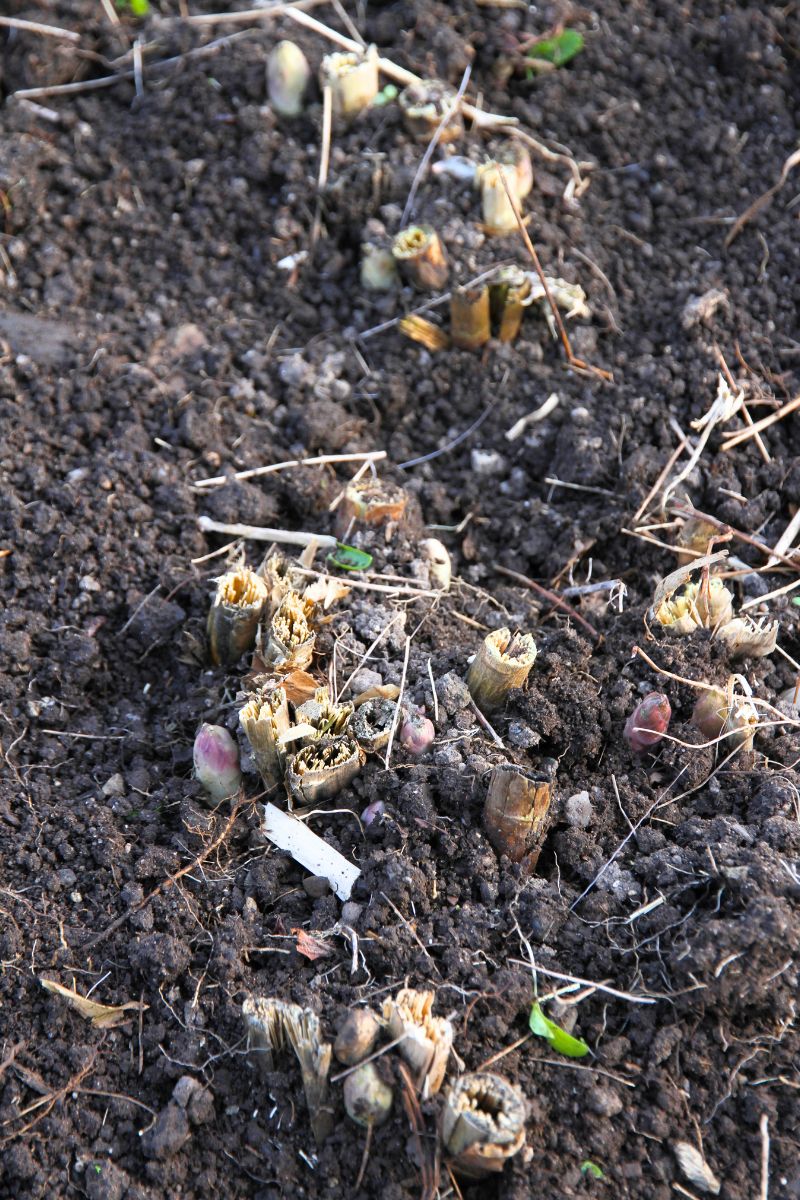
Step 3-Add Organic Matter or Compost
Once your asparagus bed is free of quack grass, dandelions or whatever weed you struggled with last year, it's time to feed your asparagus!
It doesn't matter if your plants are in their first year, second year or third. Add about 2 inches of organic fertilizer or composted animal manure to the soil surface of your garden bed.
Spread it evenly with a rake, and you're done! The rest of the year these nutrients will trickle down through the soil and feed the deeply buried roots of asparagus.
Practical note: because I use mulch that breaks down and feeds the soil, I only add composted matter to my asparagus beds every other year.
Step 4-Mulch the Entire Asparagus Bed
I'm a HUGE fan of using mulch in the vegetable garden! It doesn't matter if you have a raised bed, or a traditional garden. It's good for annual and perennial vegetables alike.
Asparagus is a perennial crop that will definitely benefit from mulch.
Here are 4 key ways mulch improves the quality of your soil and the vitality of your vegetables.
- Mulch keeps weed seeds from germinating by blocking sunlight that is necessary for seed growth.
- A natural covering (like straw or wood chips) gives good soil microbes opportunity to grow and thrive.
- Soil covering helps maintain even moisture levels in the dirt underneath.
- Organic mulch will break down over the course of a year, and become plant food.
Some folks like to use a cover crops, while others like to mulch asparagus with wood chips. But I'm a fan of straw. It's easy to access and does a beautiful job.
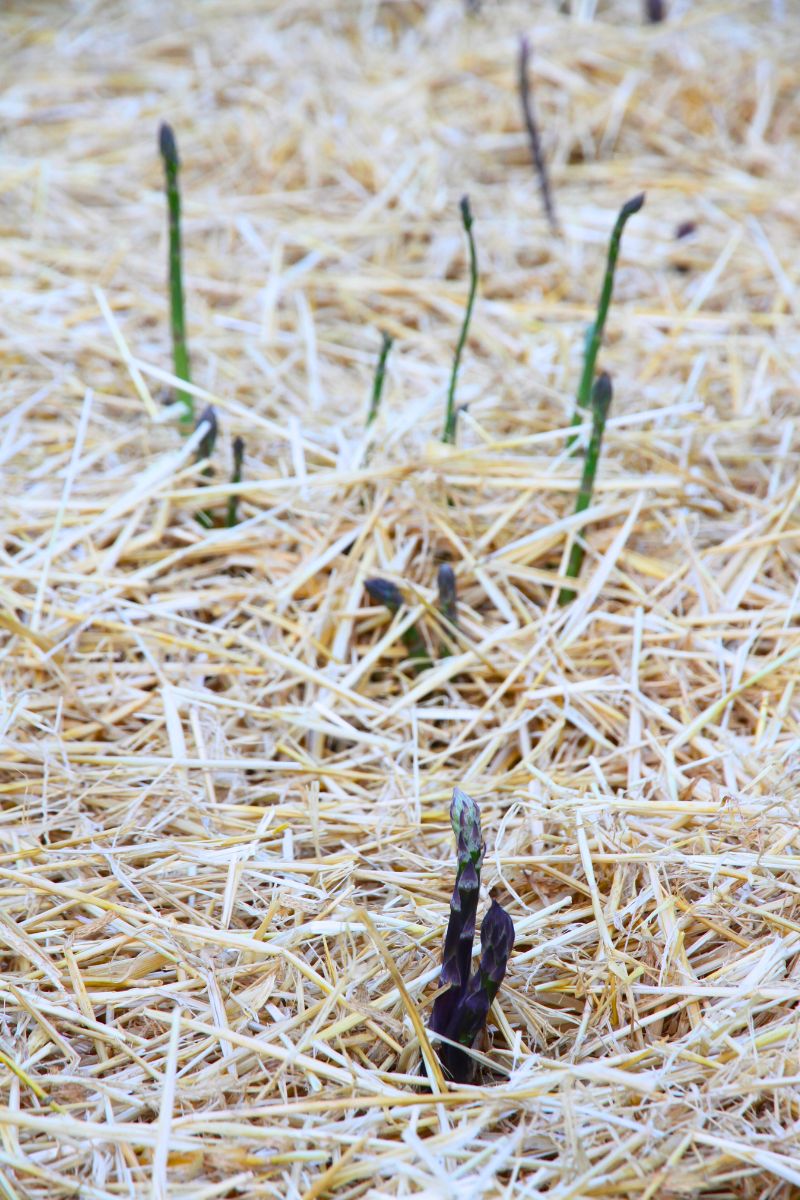
Here's how it works.
- Find and purchase some organic straw.
- Cut bales open and shake the flakes above your asparagus rows, so straw falls in individual pieces (not a mat or flake).
- Add 3-4 inches of loose straw to your asparagus beds.
- Leave the garden beds alone until the following year, when fresh asparagus appear.
Asparagus is tough, and won't have any problem growing up through your straw mulch when growing season comes.
I you don't get to cleaning, weeding and mulching your beds in the fall, you can certainly do it in the spring. Asparagus spears that are a few inches tall won't be hurt by an additional covering of compost, or a layer of straw mulch!
Read More on Asparagus
Guide to Planting Asparagus Crowns in the Spring
How to Harvest Fresh Asparagus