Simple Chicken Bone Broth Recipe

Make this simple chicken bone broth recipe, and have nourishing broth available whenever you need it. This recipe is simple, and I give you 3 different ways to make bone broth in your kitchen, and show you how to preserve it for later.
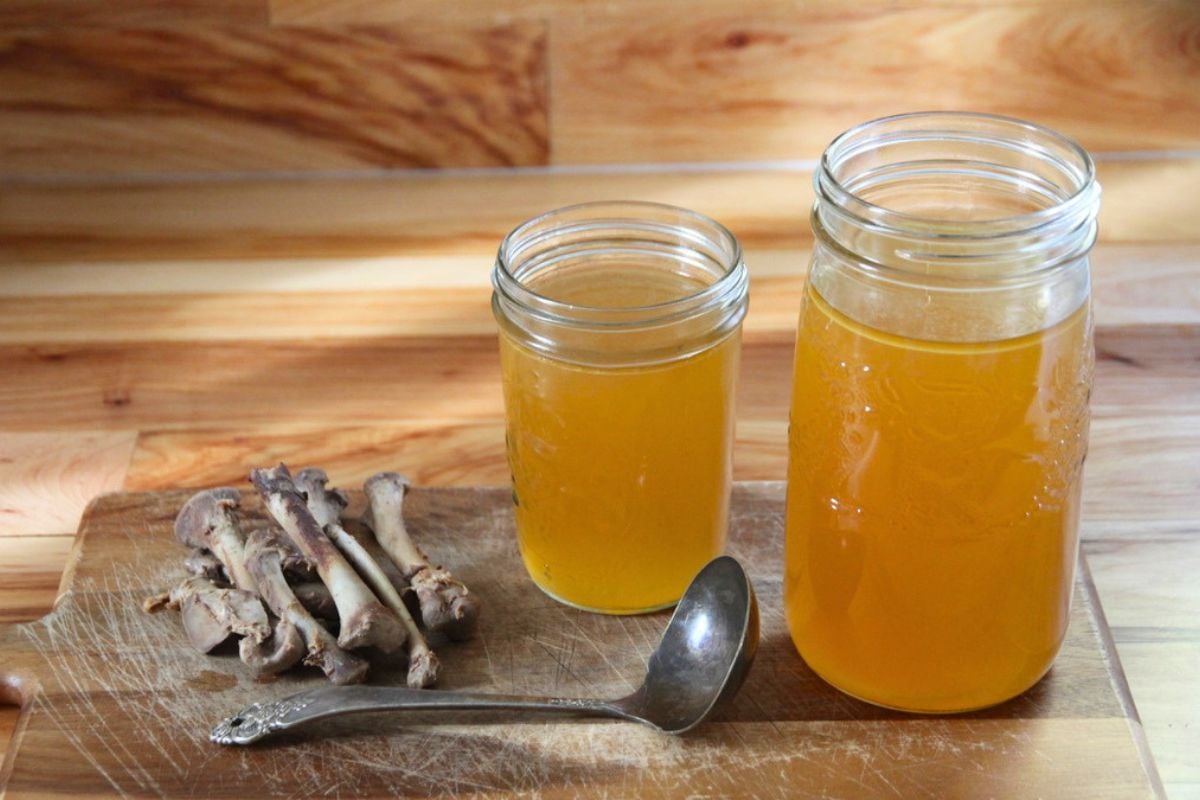
Making chicken bone broth at home is easy, and it's a wonderful way to keep nourishing food on the table at all times. Bone broth is delicious in homemade soups, stews, gravies, meat pies and more!
There are 3 basic ways to make broth: 1) on the stove top, 2) in the oven and 3), with an Instant Pot.
You can use bones from oven roasted chicken, or raw bones for making broth.
Tips for Finding Chicken Bones
There are several different places you can find chicken bones.
- Save leftover bones from whole, roast chicken (or chicken cuts with bone in) and freeze in a bag until you are ready to make broth.
- If you have a local butcher in your area who processes chickens, ask if they have extra bones after removing cuts of meat for customers.
- Small meat operations or farms that raise pastured meat birds may have extra bones after butchering and cutting away breast meat, etc.
- Those of you who keep chickens: butcher old laying hens that are on their way out, rather than disposing of them elsewhere.
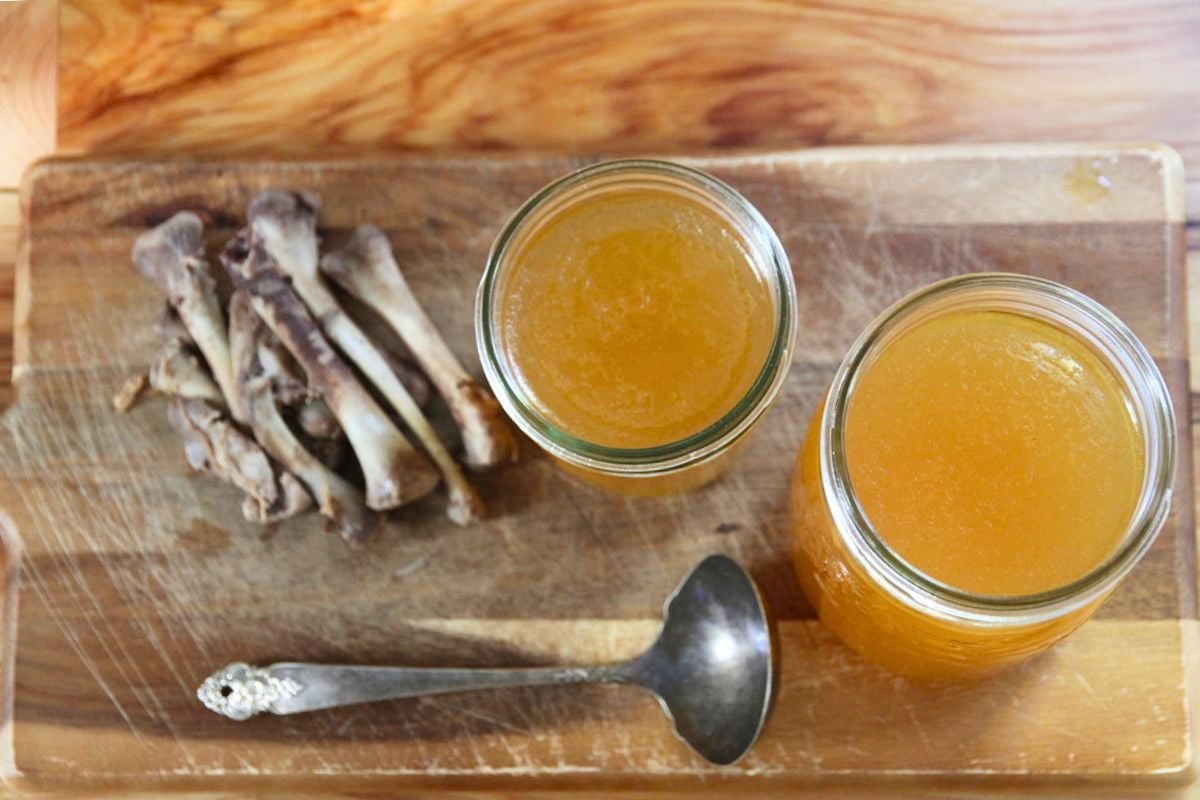
Ingredients
- Chicken bones (bones from 2-3 chickens is idea)
- Water
This recipe makes a basic, chicken bone broth. I don't add anything to it, but you most certainly can add herbs, spices and vegetables to your broth for additional flavor.
Other Tasty Additions
- Onions
- Garlic
- Leeks
- Carrots
- Celery
- Sweet corn
- Herbs (parsley, thyme, rosemary, etc).
3 Ways to Make Bone Broth
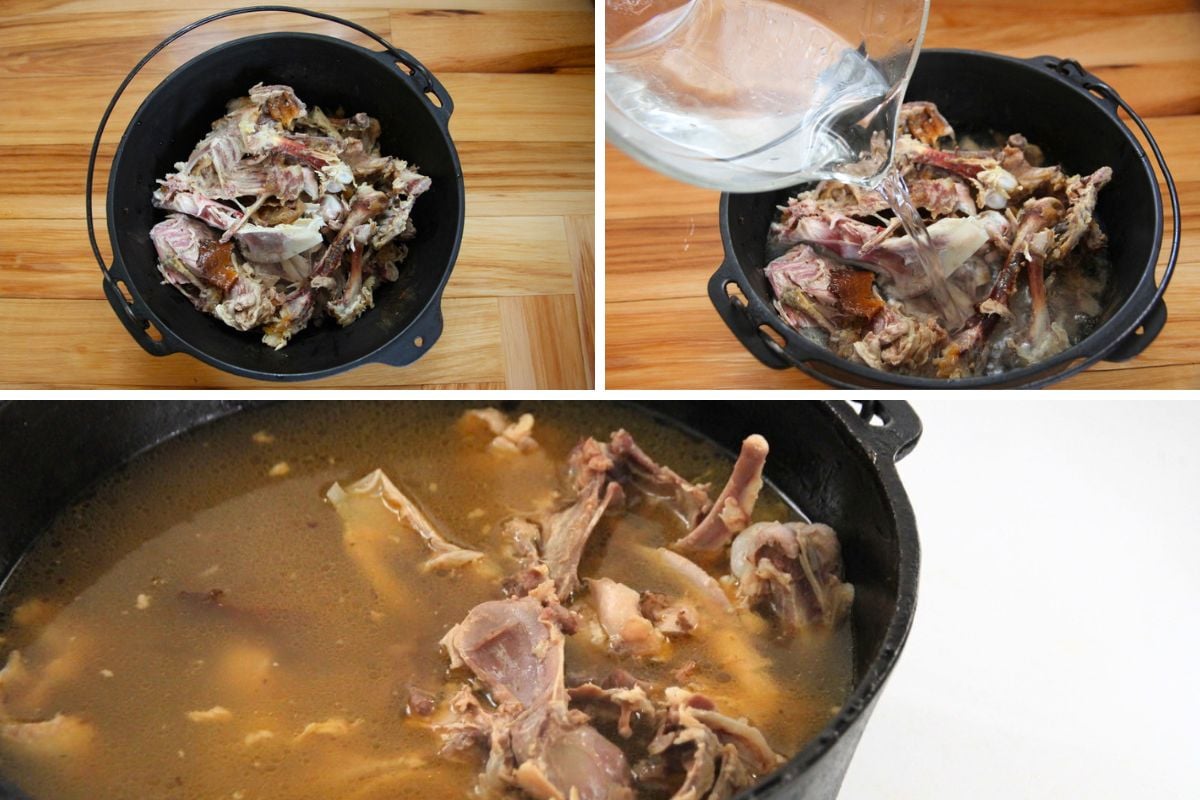
How to Make Broth in the Oven
Broth takes a long time to prepare in the oven, but it's a great option if you need to use your stovetop.
- Preheat your oven to 400F.
- Place your chicken bones (raw or cooked) in a dutch oven or a small roaster.
- Add water until all the bones are covered.
- Set your roaster in the oven and leave it for 30 minutes, or until the water boils.
- Reduce the heat and let the broth gently simmer 6-8 hours, or until gelatine is gone from bones.
- Replenish water every 2-3 hours, or as needed.
How to Make Bone Broth on the Stovetop
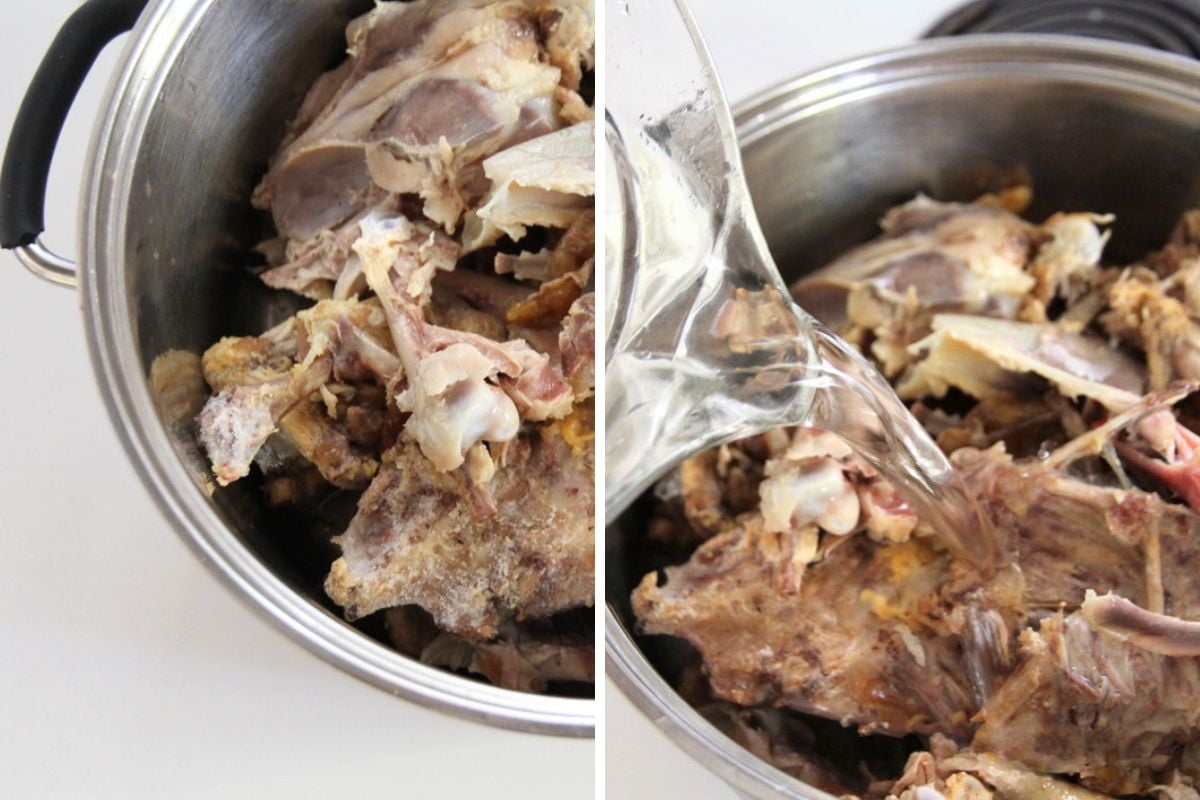
The stove top is great for making bone broth. Here's a quick breakdown of the process.
- Place bones (raw or cooked) in a stainless steel pot.
- Add water, until the bones are covered.
- Set heat to high until water boils, then reduce the heat so things gently simmer.
- Check the water levels every 2 hours, so the moisture doesn't evaporate and bones burn.
- Boil for 4-6 hours, or until gelatine is gone from bones.
How to Make Bone Broth in the Instapot
Because it uses pressure to increase heat, the Instant Pot is best and fastest at making chicken bone broth.
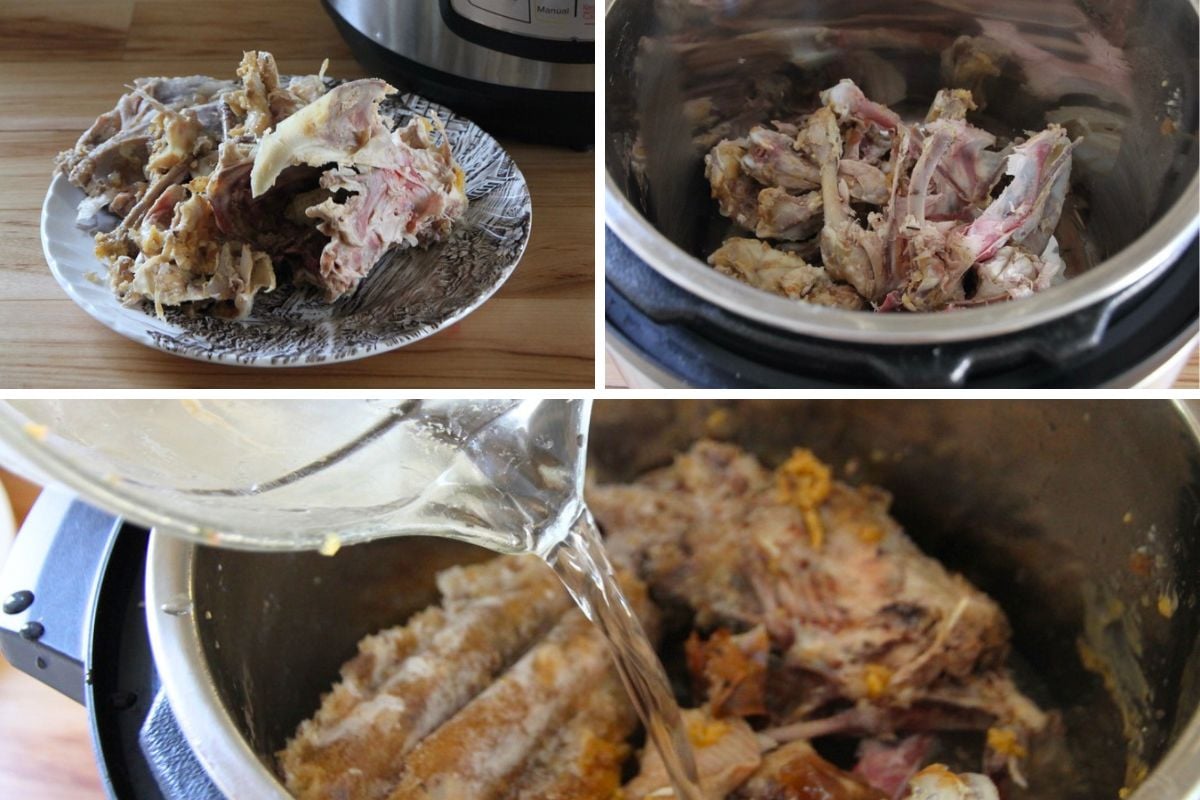
- Place bones (raw or cooked) in the Instant Pot insert.
- Cover bones with about 1 inch of water.
- Fasten the lid into place, and cook on soup/broth setting, increasing the time to 2 hours.
- Check to see if ligaments and tendons have dissolved.
- If not, run the Instant Pot through another 2 hour cycle.
Tips for Making Quality Broth
Tip 1-not all chickens are equal. Pasture raised or backyard chickens are more developed with stronger muscle, bones, tendons and ligaments. These birds will take longer to break down in the soup pot!
Tip 2-you don't have to cook bones until ligaments dissolve. While long cook times are best for getting all the gelatine from the joints, you can stop after an hour or two and still have delicious, healthy broth.
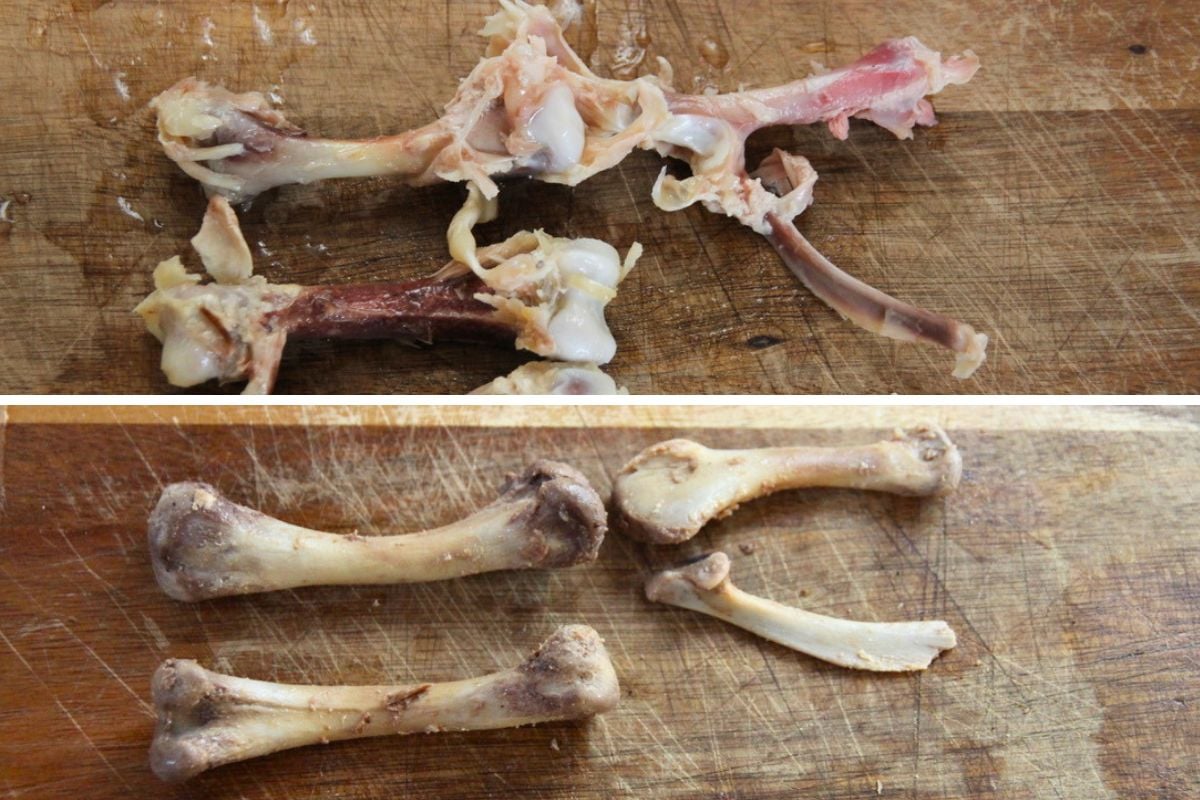
Bottom: clean bones after joints and ligaments have boiled away.
Tip 3-always strain broth to remove small bone fragments. Small bits of bones will likely be found in your broth, so always strain it through a cotton cloth (or fine mesh strainer) before using in the kitchen!
How to Strain Bone Broth
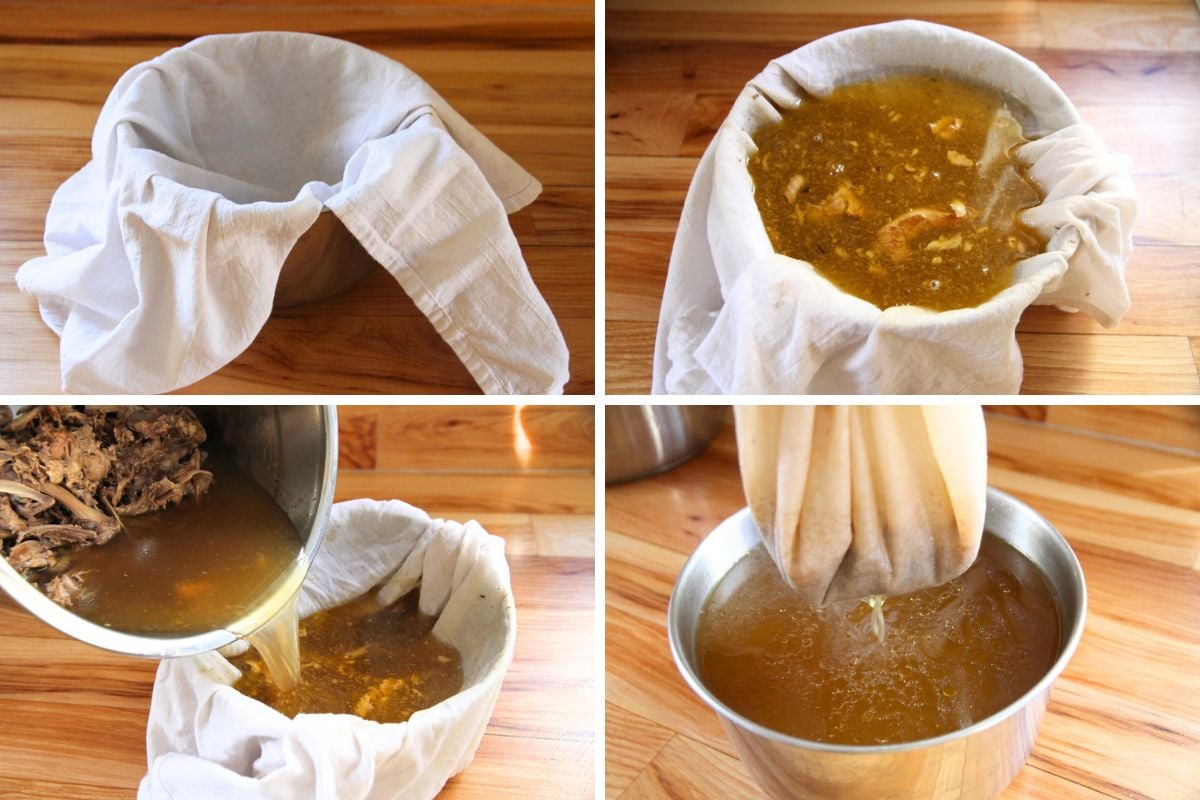
In my kitchen, I always strain broth through a cotton cloth to be sure bone fragments are removed. Plus, it leaves you with a clear, pure broth without floating bone marrow or bits of soggy skin.
To strain broth, just line a heat-safe bowl with a cotton cloth.
Pour the broth into it, and lift the cotton cloth, letting the broth drip through. Discard the solids and move to the next step with your broth: using it, refrigerating it, or preserving it!
3 Ways to Preserve Bone Broth
Refrigerator Preserving
I know the term refrigerator preserving seems ridiculous! But there actually is a way you can make broth last longer, in the fridge.
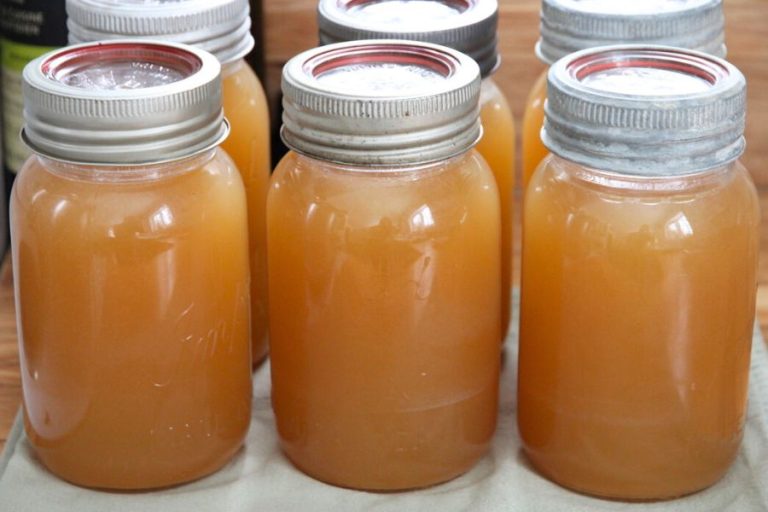
- Pour hot (not boiling) broth into glass jars.
- Fill jars very full, leaving no more than 1/8 inch open space at the top.
- Fasten a canning lid and ring tightly into place.
- Lay a thick tea towel down on your fridge shelf, and set jars of hot broth on it.
- Only open jars when you are ready to use.
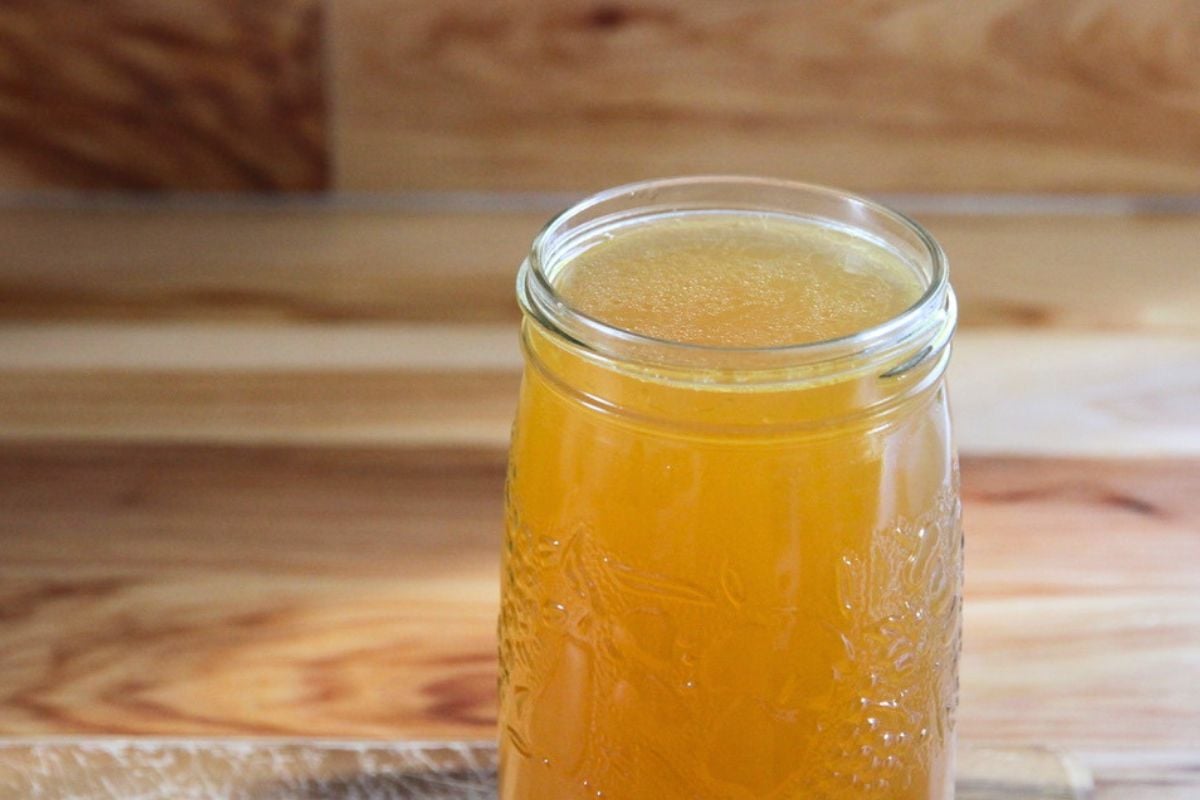
Hot jars going into a cold fridge-with little (or no) headspace-will form a gentle vacuum seal. If left unopened, these jars will usually last 14-21 days longer than an open jar of broth.
Freezing Broth
If you want to store chicken bone broth for longer, freezing it is a good option. To do this, you'll want some freezer containers with lids.
You can use:
- wide mouth canning jars (yes, its best to use wide mouth)
- reuse plastic yogurt, sour cream or dairy containers
- small, stacking plastic pails with lids
To Freeze in Glass Canning Jars: leave 2 inches of headspace. Lid, label and cool broth to room temperature before putting jars in the freezer. Glass is fragile and may crack, so as a precaution be sure to put a baking dish below.
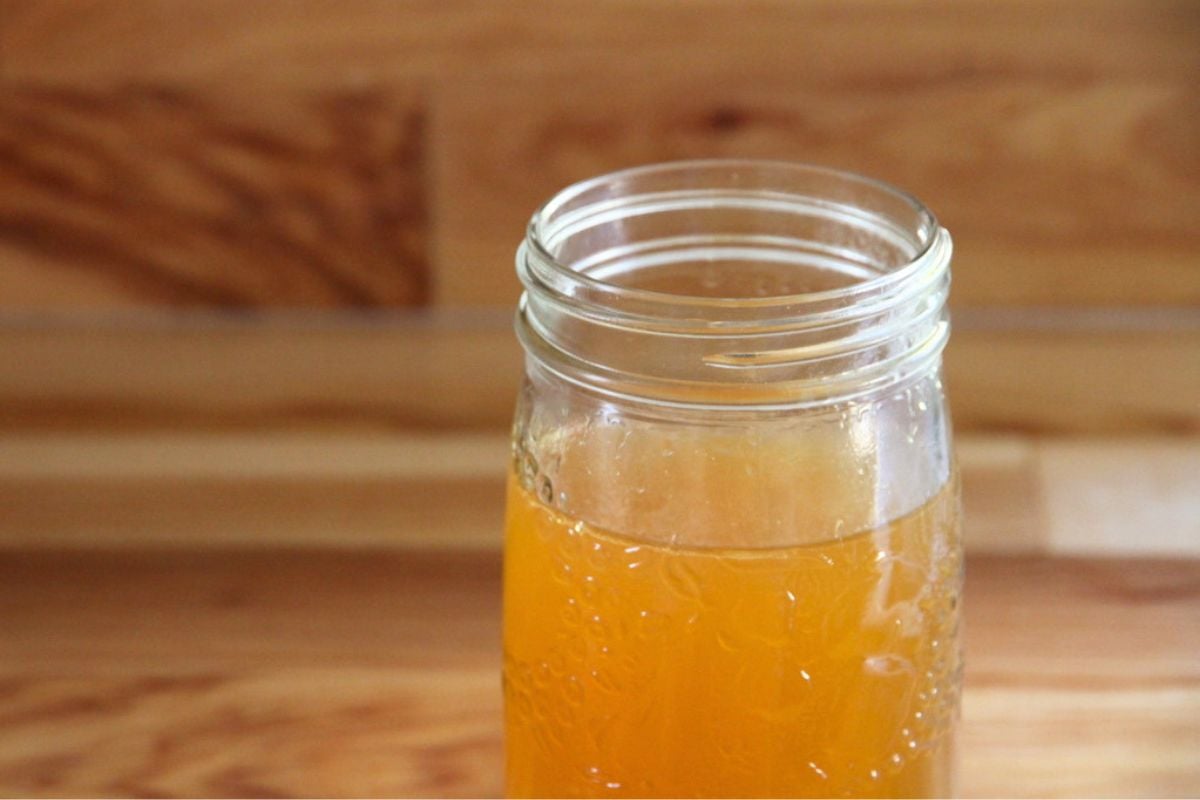
To Freeze in Plastic Containers: unlike glass, plastic can expand and contract. Plastic containers only need 1 inch of headspace, and should have a tight fitting lid.
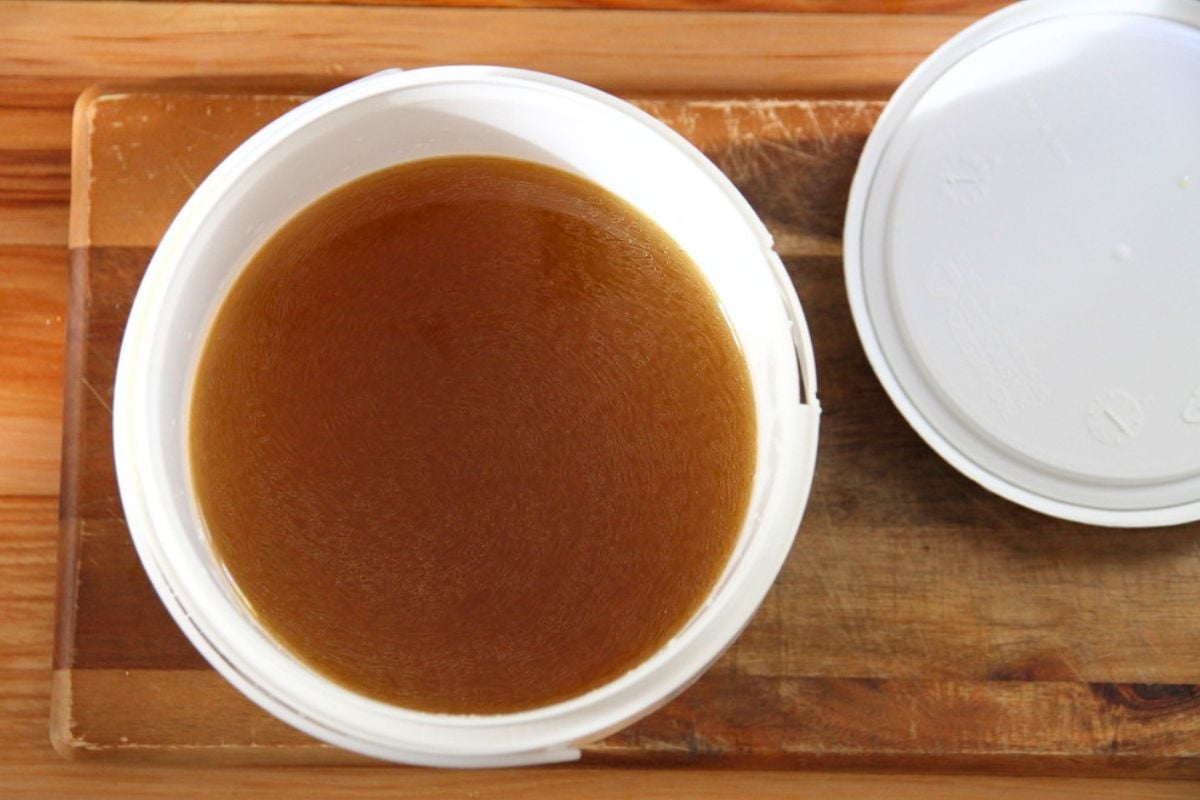
Helpful tip: always store containers of liquid in a flat, upright position, and put a tray or dish below, in case of a spill!
Canning Broth
I love canning broth! It's always in a liquid state, is shelf stable and ready whenever I need it. But broth isn't safe to preserve in a water bath canner. It need higher temperatures to be safe, so it must be pressure canned.
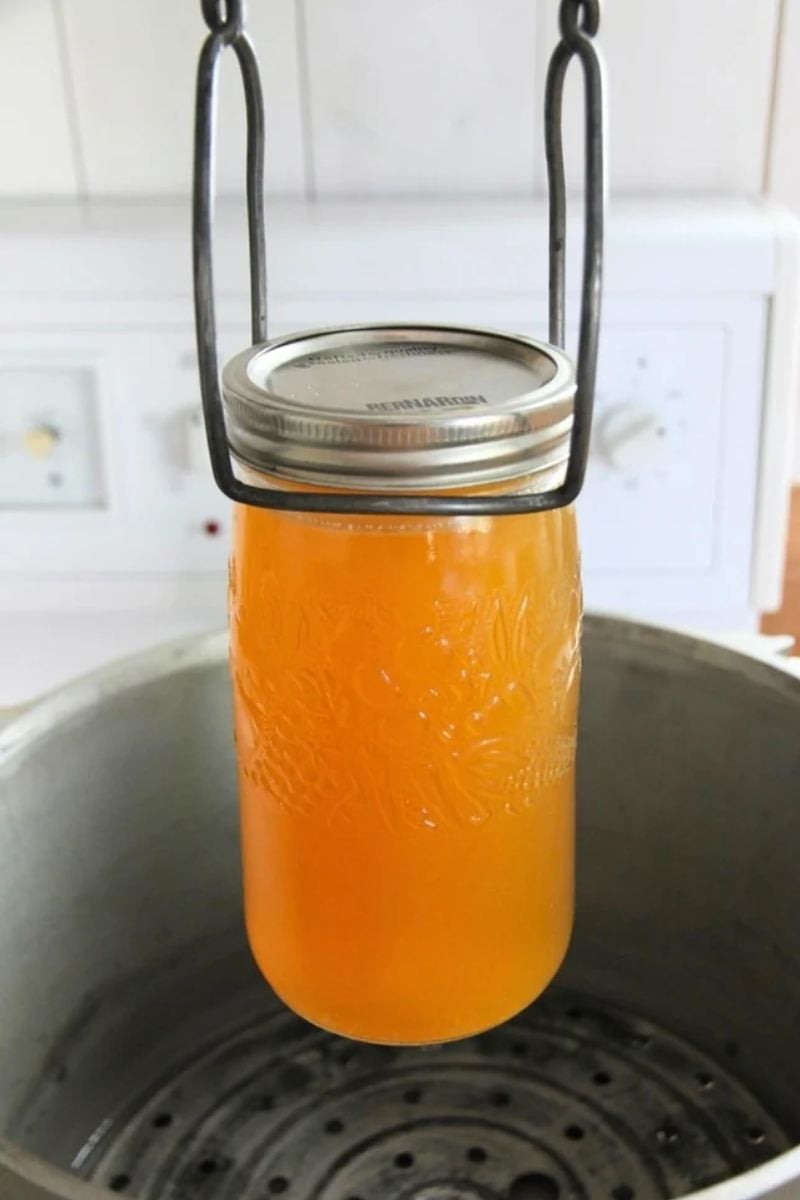
I have a small course I teach: Pressure Canning for Beginners, and I also have a tutorial on how to pressure can chicken broth.
Ways to Use Chicken Broth
You can use chicken bone broth just like regular bone broth, in any of your favorite recipes. Here are some ideas!
- Soup base
- Stew base
- Poached eggs
- Gravy
- Meat pie
- Shepherd's pie
Simple chicken bone broth recipe
Equipment
- 5 quart stockpot, roaster, dutch oven OR an electric Instapot
- large stainless steel bowl
- cotton straining cloth
- storage containers for broth options: plastic freezer containers or canning jars with lids
Ingredients
- 2-3 chicken carcasses
- 12-14 cups water, or enough to cover bones
Instructions
Broth in the Stove
- Preheat your oven to 400F.
- Place your chicken bones (raw or cooked) in a 5 quart or 4.7 litre dutch oven or small roaster.
- Add 12 cups water, or whatever it takes to cover bones.
- Set lid in place on dutch oven or roaster, and place in the hot oven.
- Check 30 minutes later, to see if water is boiling.
- When water boils, reduce the heat to 300F or even 250 and let the broth gently simmer 6-8 hours.
- Replenish water every 2-3 hours, or as needed to keep bones covered.
- Simmer bones until the ligaments fall apart, dissolve and bones are clean.
Broth on the Stovetop
- Place bones (raw or cooked) in a 5 quart or 4.7 litre stainless steel pot.
- Add about 12 cups of water or so, until bones are covered.
- Set heat to high until water boils, then reduce the heat to a gentle simmer.
- Keep the lid on, and check the water levels every 2 hours or so, to make sure bones are covered.
- Boil for 4-6 hours, or until gelatine is gone from bones.
Broth in an Instapot
- Place bones (raw or cooked) in the Instapot.
- Cover bones with about 1 inch of water.
- Fasten the lid into place, and cook on soup/broth setting, increasing the time to 2 hours.
- Check to see if ligaments and tendons have dissolved.
- If not, run the instapot through another 2 hour cycle.
Straining Bone Broth
- Let the broth slightly cool, and line a stainless steel bowl with a cotton cloth.
- Pour the bones and broth into the cloth lined bowl.
- Lift the cloth with bones and discard bones in the compost.
Refrigerating Bone Broth
- Pour hot broth into glass jars and fill to the rim, adding a canning lid and band.
- If you have glass shelves in your fridge, lay down a thick, folded tea towel.
- Place jars of hot broth on it, and leave sealed until you are ready to use.
- Hot broth will form a simple vacuum seal as it cools, making refrigerated broth last 14-21 days (or slightly longer, if seals are unbroken).
Freezing Bone Broth
- To store in the freezer, pour broth into plastic freezer containers with lids, leaving 1 inch open space at the top.
- Clip tight fitting lids into place, label with contents and date.
- Freeze broth in a secure, fully upright position.
Canning Bone Broth
- Bring broth to a rolling boil in a stockpot.
- Ladle broth into pint (500 ml) size jars, leaving 1 inch open space at the top.
- Dial gauge canner: process pints at 0-2,000 ft in elevation for 20 minutes at 11 pounds of pressure.
- Weighted gauge canner: process broth at 0-1,000 ft in elevation for 20 minutes at 10 pounds of pressure. If you are higher than 1,001 ft in elevation, increase to 15 pounds pressure, still processing for 20 minutes.
- Remove jars after processing, cool to room temperature and store sealed jars on your pantry shelf, where they will be shelf stable up to a year.
Notes
- You can use cooked bones, or raw bones from freshly harvested chickens.
- For additional flavoring, feel free to add onions, garlic, carrots or other vegetables and herbs mentioned in the article.
- Broth will last for about 3 weeks in the fridge if you use the method I outlined, but for long term storage do freeze or can the broth.