How to Grow Beets in Mulch from Seed

Grow beets the easy way, by learning how to plant beet seeds in mulch. Organic mulch holds back the weeds, keeps the soil cool and can prevent beetroots tops from cracking and drying out.
If you want to save time in the garden and have a bumper crop, plant beet seeds in mulch!
As a vegetable gardener, I'm always looking for ways to cut back on the work load, so I can produce good food for less effort.
Don't get me wrong; I enjoy spending time in my gardens. But the way I see it? If I can get my work done faster, I'll have time to grow more vegetables.
Anyone else have this problem?!
I started using mulch 10+ years ago to cut back on weeding, watering and to feed my garden soil throughout the year. What I discovered was this: vegetables that like cool soil greatly benefit from mulch.
This is especially true if you live in a hot climate or have fast-draining garden beds.
So I started growing carrots in mulch, and they loved it. I tried planting onion sets under a heavy layer of mulch, and they thrived. I began planting hardneck garlic in the fall with a 4-5 inch deep layer of straw mulch.
And of course, I planted spring beets in wide, mulched garden beds. They've never done better.
I know a lot of folks don't like beets. But we really, really love the roots and the green leafy tops.
In the summer, we use the raw greens in salads, steam the leaves or freeze beet greens. In the summer I cook the roots for dinner or ferment beet kvass in a jar. When winter snow threatens, we like storing beets for winter in our cold room or root cellar.
In my gardens, I specifically grow the Lutz Green Leaf Beet. This variety has edible green tops that are similar to swiss chard, and have better flavor. The roots don't go woody or tough, so you can plant once and harvest all year long. It's also an excellent winter keeper, so we put lots into winter storage.
Why I Grow Beets Every Year
Here's why I like growing beets in my gardens!
- When it comes to root vegetables, beet seeds are larger than most and are easy to plant.
- Beet seedlings need minimal thinning.
- Planting beets in mulch significantly cuts back on the weeding and work.
- You can use beet leaves in salads or freeze beet greens for winter use.
- Beet roots yield an early harvest and can ready in 50-60 days after planting.
- With winter storage varieties, you can plant once and harvest all year long (no succession planting needed!).
- Beets keep very well in winter storage and outperform all other vegetables in this respect.
Beet Varieties for the Home Gardener
With the ease of online ordering and seed catalogs, gardeners have a lot of options when it comes to buying beet seed. Here are some details to help you decide which beet is right for your garden.
Beet Types
There are 4 primary types of beets to choose from.
- White beets
- Golden beets or yellows
- Red candy stripe
- Traditional red beet
Beet Shapes
You thought a beet root was a beet root, right? Well, beets come in two different shapes.
- Round bulbous roots
- Long cylindrical shapes
Common Beet Varieties
Here are some common varieties you should be able to find and try!
- Albino beet
- Bull's blood red
- Burpee's golden
- Chioggia (aka Candystripe)
- Cylindra (produces long cylindrical roots)
- Detroit dark red
- Lutz Green Leaf
Choosing the Best Beets to Grow
Before you buy seed, it's a good idea to decide what you want beets for.
Is it summer eating? Canning and preserving? Or winter storage?
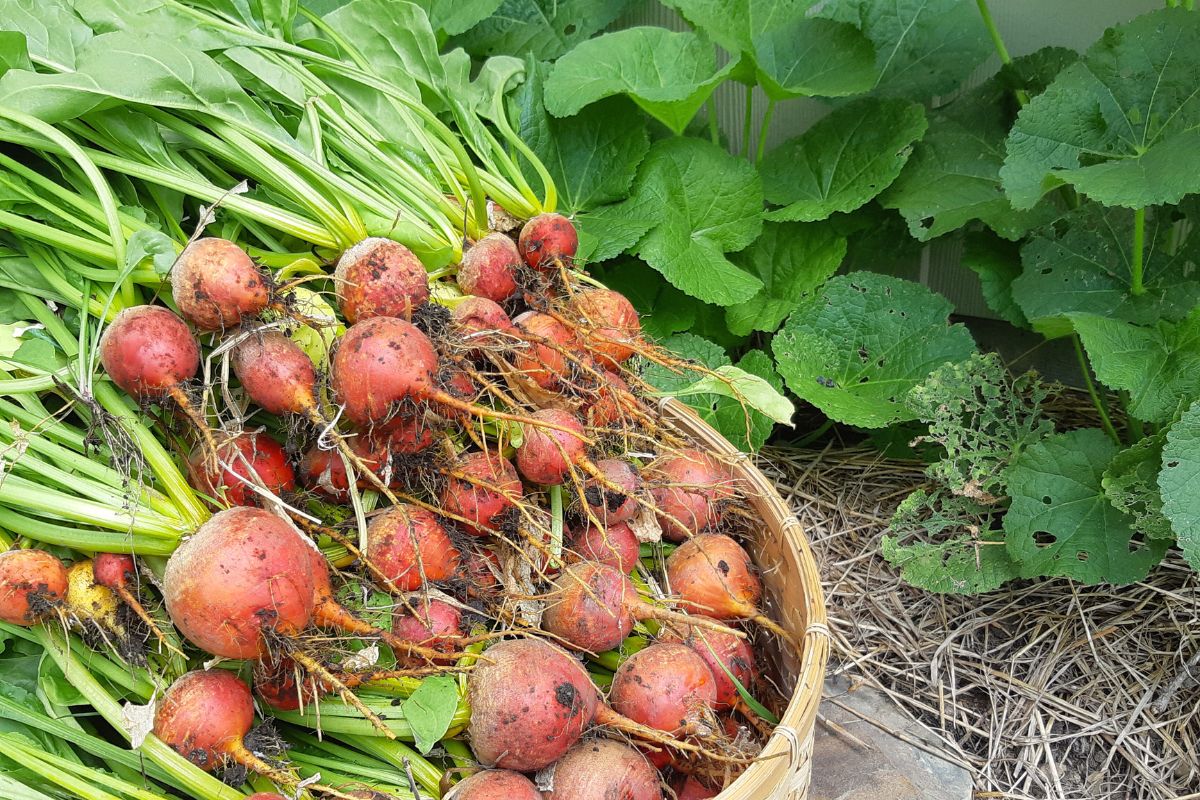
Here's the thing about beets: most varieties will grow to be the size of a golf ball in 50-60 day's time, which is considered prime harvesting size. But once they reach this size, varieties will differ.
Summer beets need to be harvested after 60-70 days of growing, or they'll go woody.
Winter storage beets can be left in the ground all year, where they'll keep growing while remaining tender and crisp.
Best Beets for a Summer Harvest
Golden beets, white beets and cylindrical beets are great for a 1x summer harvest.
You can also do succession planting with these beets, if you have the time, space and mild summer temperatures.
Helpful tip: for an ongoing harvest of summer beets, you'll want to plant a new bed every 2-3 weeks, until you are about 50 days out from your first frost of fall.
Best Beets for Year-Long Harvest
If you want to plant beets in the spring and harvest all year long, it's best to choose a storage beet or winter keeper variety.
You can find these varieties with just about any seed company.
Storage or winter beet roots can be harvested at any point and will remain tender, regardless of size.
And yes, these varieties keep very well in our cold room or root cellar. In fact, they often keep longer than our other root vegetables.
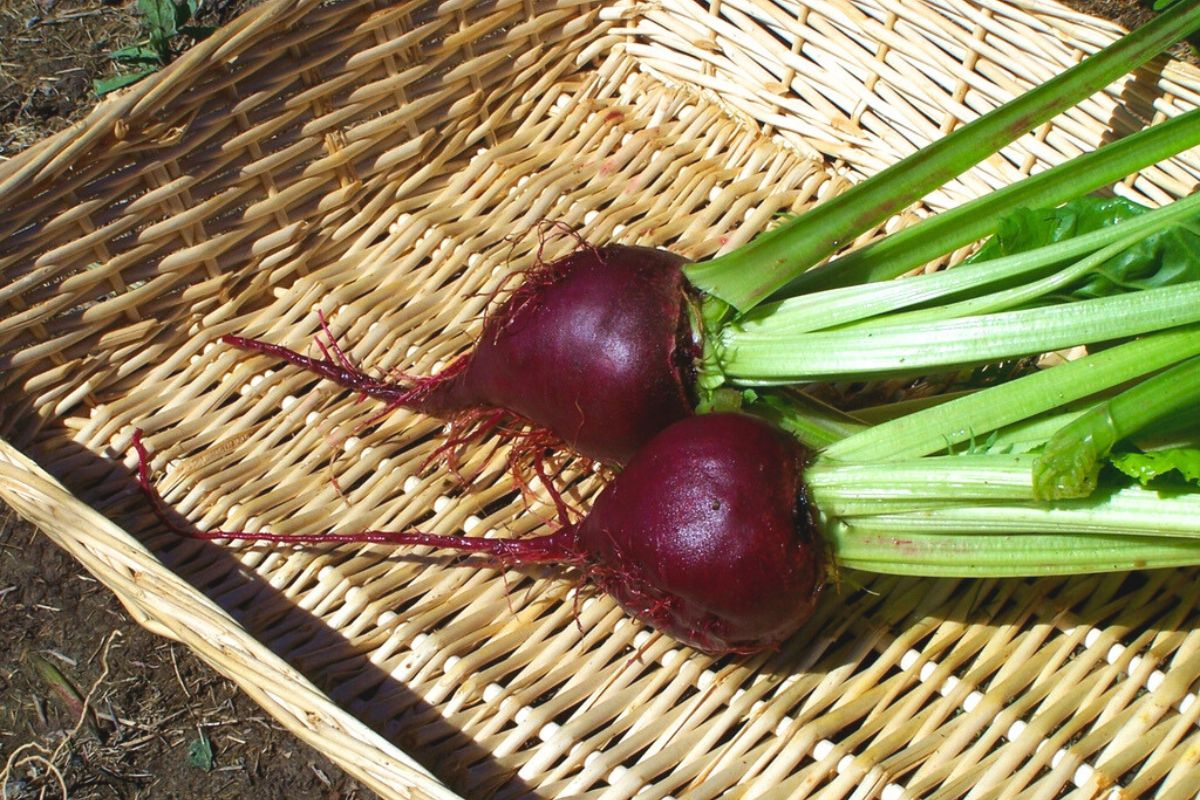
Best Beets for Tender Green Leaves
If you want beets for their leafy greens, be sure to get a dual purpose beet (noted for good roots and leaves).
I like saving time and space with dual purpose vegetables, so every year I grow the Lutz Green Leaf Beet.
It has delicious, edible green leaves with flat center stems that are very similar to swiss chard. This beet variety doesn't go tough if left in the ground until late fall, and the large roots keep well in winter storage.
In my garden, the Lutz Green Leaf is a winner for greens and roots!
Best Time to Plant Beets
Beets are technically a cool weather crop.
Here in my northern climate, I sow seeds around the same time as my last average frost of spring.
But if your summers are cool and you can keep the soil moist, beet seeds can be planted throughout the summer months, up until you are 50-60 days away from your first fall frost.
Where to Plant Beets in the Vegetable Garden
Beets like full sun, but they can be grown in partial shade, provided they have at least 6 hours of sunlight.
Tips on Preparing Garden Soil for Beets
Beets don't grow well in clay. They prefer well drained, loose soil.
Always work and loosen your beet bed with a garden fork, so the round roots meet with very little resistance and actually grow under the dirt, instead of sitting on top of the soil.
Helpful tip: if your soil is too packed, beets will sit on the surface like an onion. The top of the root will be dry, tough and may crack under the sun's heat. If you want tender beets, make sure the soil is loose and that the round root is covered.
How to Mulch Garden Beds Before Planting Beets
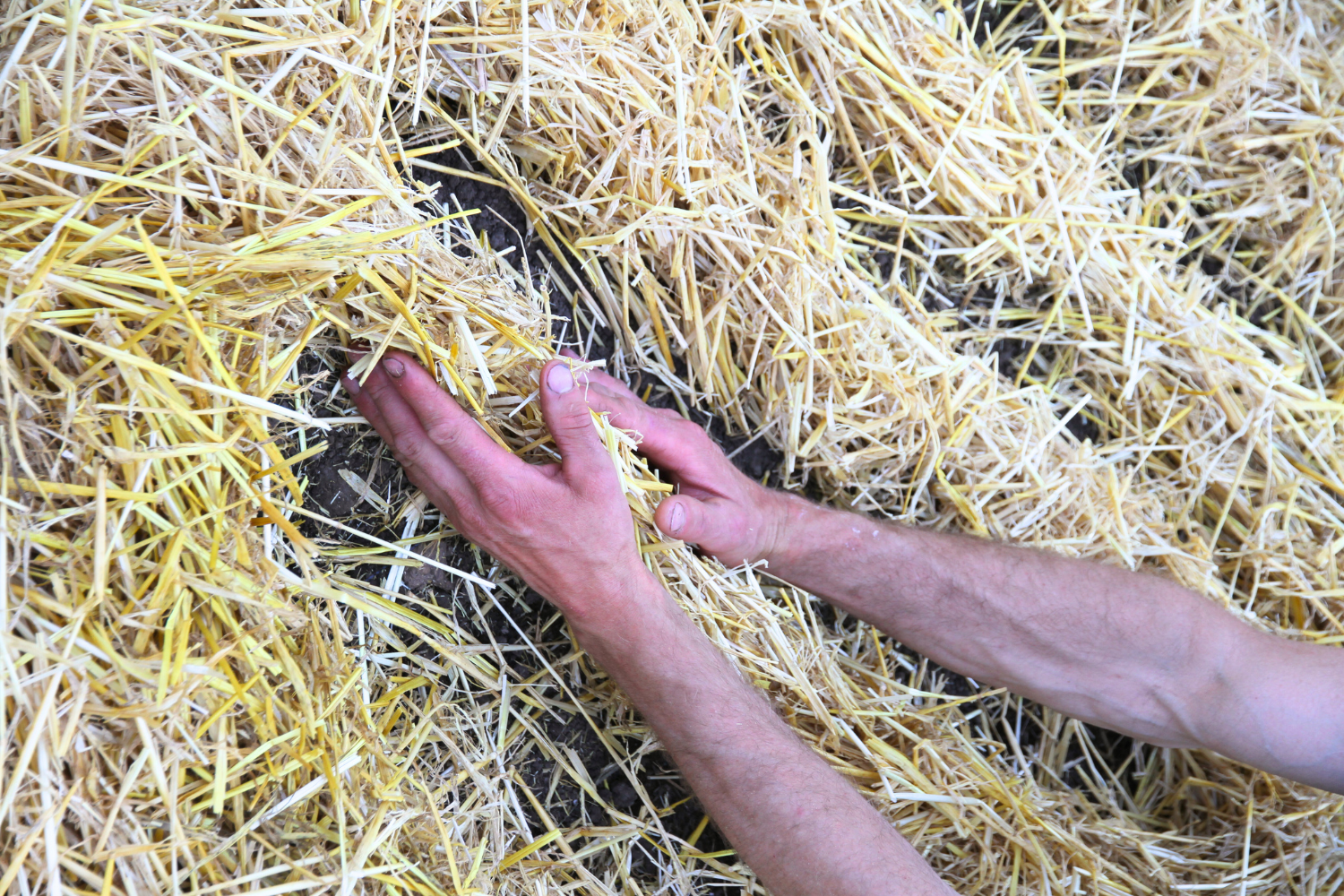
I really, really like growing beets in straw mulch! You can't mulch on top of seeds after planting, but you can mulch the entire garden bed, then part your mulch into rows and plant seed in those rows.
Beets like cool soil, and mulch definitely keeps the soil cool. Plus, the mulch locks in moisture and keeps the weeds down too.
This photo is an example of how we mulch our beet beds with about 2 inches of straw and divide it into rows with spacing required for our Lutz beets.
How to Plant Beet Seed
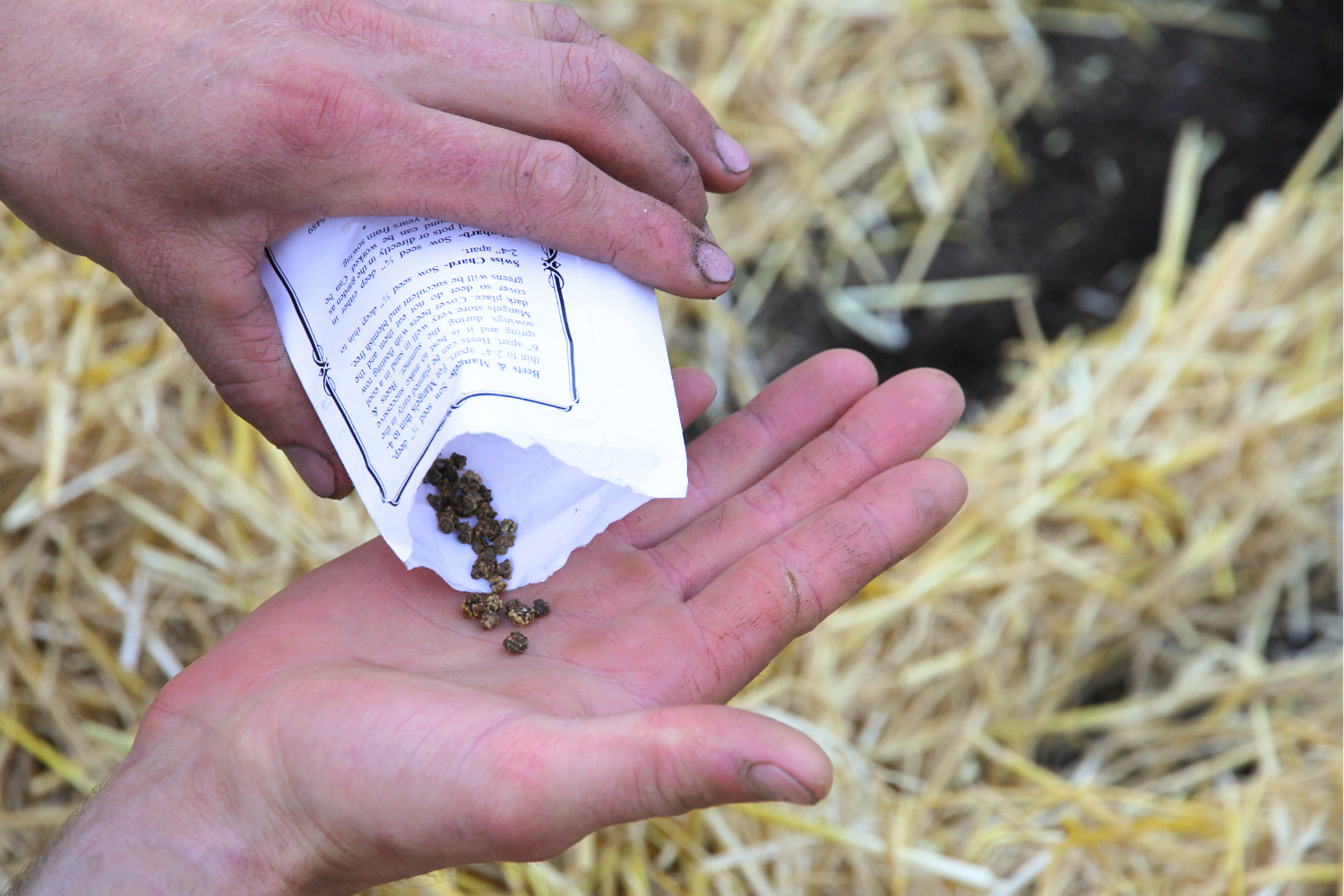
Beets might be one of the easiest root vegetables to plant, because the seeds are larger than carrot, parsnip or turnip seed!
Interesting tip: did you know that a "beet seed" is actually a seed cluster? Each lumpy 'seed' holds 2-4 seeds. That's why your beets can come up too thick, in spite of your best efforts!
Step 1
If using mulch, go ahead and cover the beet bed with 2 inches of loose straw. Prepare to plant by making a furrow about 1/2 inch deep. You can do this with a hoe, but I prefer to use my pointer finger.
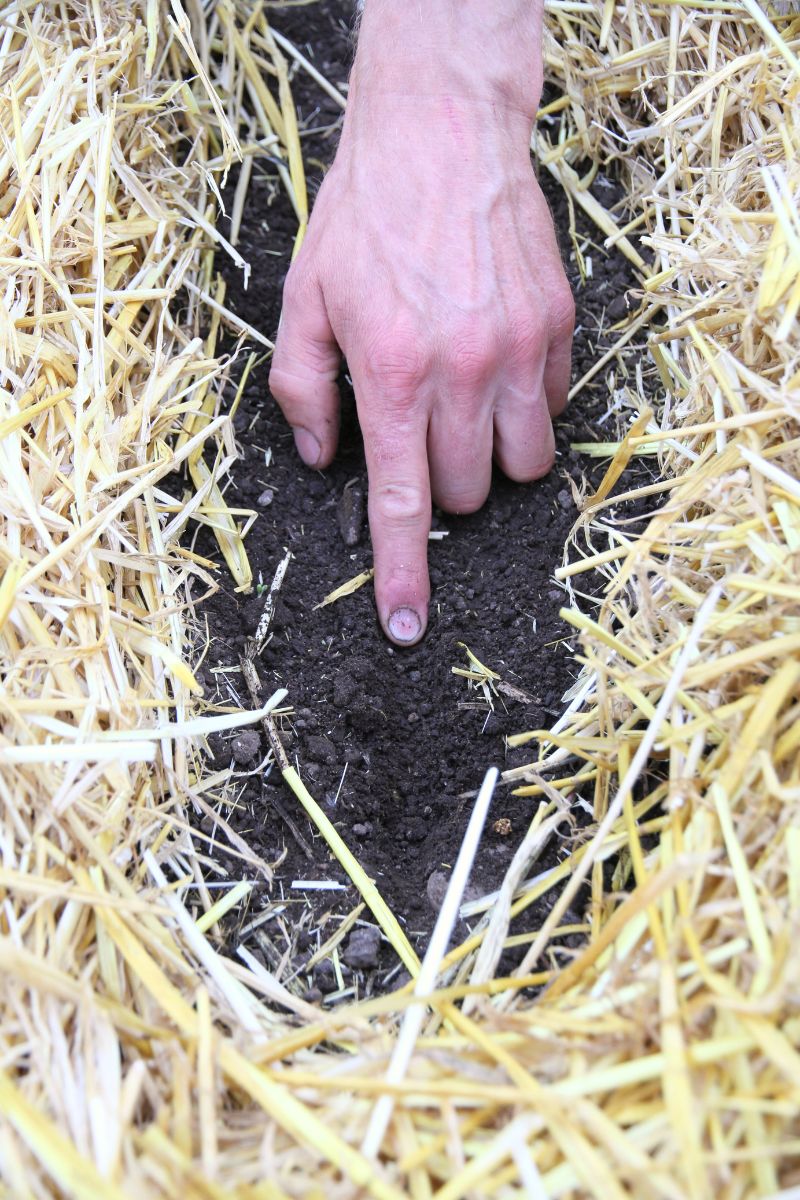
Row spacing really depends on your variety of beets!
If you are growing summer beets that will be harvested when they reach golf ball size, space rows about 4 inches apart.
But if you are growing beets for winter storage and will let them grow to substantial size, space rows about 8 inches apart.
Step 2
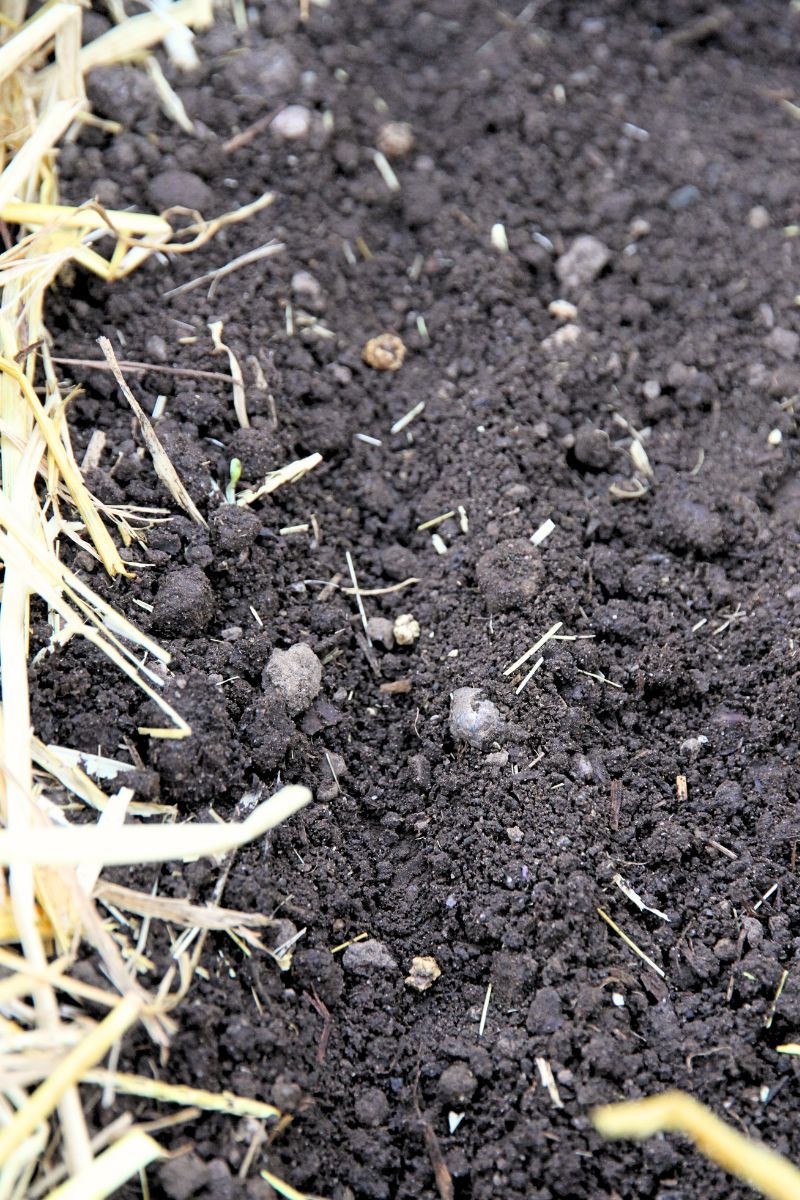
Open your packet of seeds and plant a single seed every 3-4 inches. Beet seeds are easy to handle, so this part is easy.
Step 3
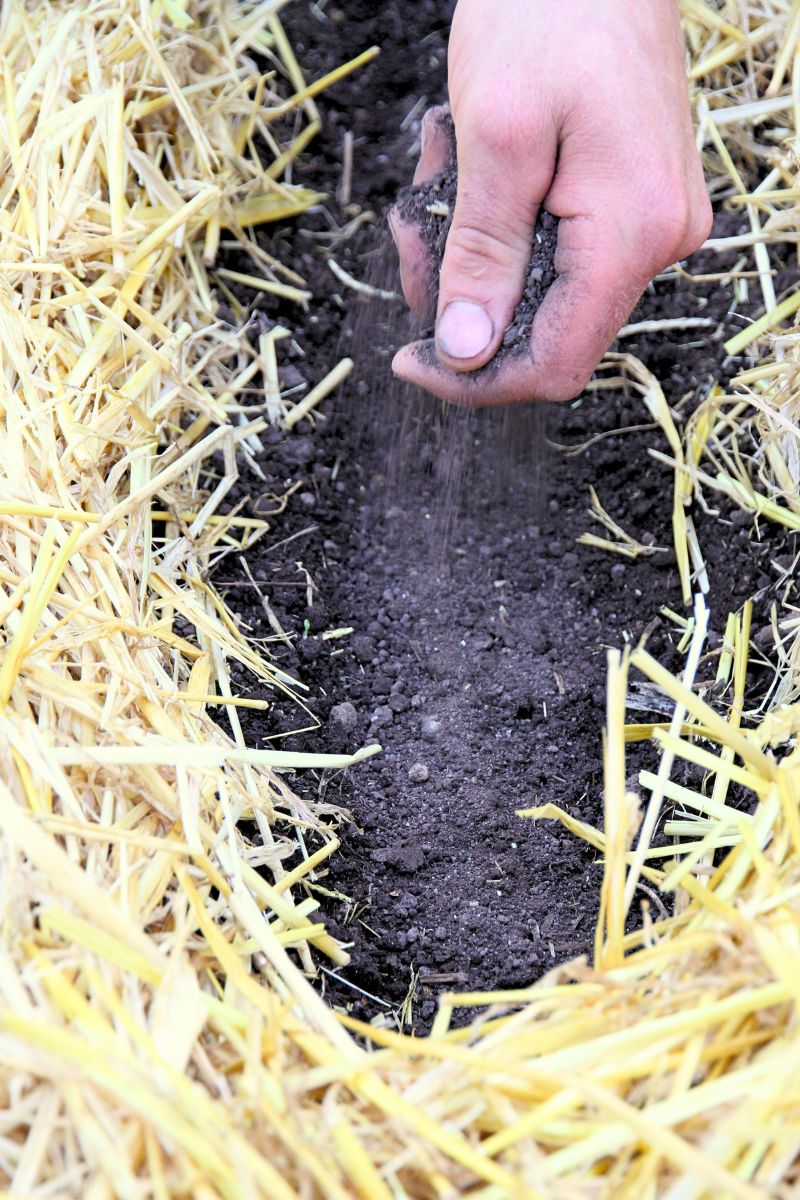
Cover your seeds with soil, making sure they are buried between 1/4 inch and 1/2 inch deep. Pat the soil into place and water.
Step 4
At this point, water is the most important thing! Keep the soil moist until beet seedlings appear. Make sure they stay well watered until beet leaves are several inches high.
How to Grow Beets
If you want beet roots to develop, you have to thin your seedlings! If not, you'll just get beautiful beet tops with small roots that don't amount to anything.
I'll be the first to admit that I dread thinning my root vegetables. Beets are much easier than carrots...I try to encourage myself with this fact!
Homegrown beets can be thinned 1x, or you can thin them several times as the roots grow and expand. If you are thinning summer roots, they should be spaced about 4 inches apart.
But if you're dealing with winter keepers, you'll want to thin roots to about 6-8 inches apart.
When to Harvest Beets
You can start pulling beets when they reach golf ball size. Summer types should be harvested before they get much bigger than this. But winter keeper or storage beets can be harvested at any size.
How to Cook and Preserve Beets
- Beets make a wonderful side dish at the dinner table when roasted, steamed or boiled.
- Beets ferment beautifully in homemade beet kvass and purple cabbage sauerkraut!
- Beets keep very well over winter if you have a cool place to store them; they outlast all other vegetables in our cold room!
Want to learn how to overwinter beets in cold storage? I teach you how to overwinter root vegetables in a cold room here.