Is Hunting for Meat Cheaper Than Buying It?

Want to discover the true cost of hunting for meat? Use my free chart to see whether or not hunting is cost effective for you!
Have you ever asked the question: is hunting for meat cheaper than buying it? My man and I did, just after we set a big financial goal for ourselves.
We wanted to move to the countryside, build a little cottage and have a few acres where we could keep chickens, honeybees, a goat or two, and have space for children to roam.
Finances were tight, and we needed to save 25% for a downpayment on raw land and a home build.
So we began examining everything in our lives to see what was actually cost effective.
Meat is a big expense for most families. We were hunters, but we never actually calculated the cost of our wild game. Was it cheaper to hunt for meat, or buy it?
The Cost of Hunting for Meat
Raised in hunting families, our natural instinct was to carry on with this traditional way of putting meat on the table. However, in light of the fact that we needed to save money, the question had to asked: is hunting for meat cheaper than buying it?
We needed to know for certain. As a result, we came up with a chart on the cost of hunting that tracked our expenses. In the end, we had our answer!
Before you scroll down to grab your free copy of this chart, let's briefly touch on the expenses that most hunters encounter.
Cost 1: Your Hunting Courses
Minimal though it may be, this is the first thing a hunter (or would-be hunter) has to take into account. In both USA and CA, you have to take and pass a paid, Hunter's Education Program before you're allowed to hunt rifle or archery.
In Canada, rifle hunters are required to have a Possession and Acquisition License (PAL) that must be renewed every 5 years. With a fee, of course!
Yep, we've got it tough up here. 😉
Cost 2: Your License and Tags
Every year, hunters face the cost of a hunting license. They must also purchase tags for each type of animal they wish to harvest.
Most of the time, prices are quite reasonable. If these were the only two expenses a person needed to consider, hunting for the table would be very cheap indeed!
Cost 3: Hunting Equipment
Rifle hunters not only face the cost of a rifle, but they also have to think about a good scope, ammunition and maintenance gear. Archery hunters have the cost of a bow, good sights, arrows and tips, plus a few other odds and ends.
Depending on where you hunt, you may also need binoculars or a spotting scope, quality camping gear, a tree stand or special clothing. All these things add to the actual price of your harvested meat!
Check out our all-time favorite hunting knife right here.
Cost 4: Fuel for Driving
In a lifetime of hunting, the majority of us will spend the contents of our pocketbook not on equipment, tags or gear, but on fuel for our vehicles. If you have to drive even 30 minutes to reach a location where you can hunt, the cost of the animal you (hopefully) harvest is going to quickly add up!
My man and I are fortunate to have good hunting within a 10-15 minutes radius of our home. You probably imagine us bombing down back roads in an old truck, don't you?
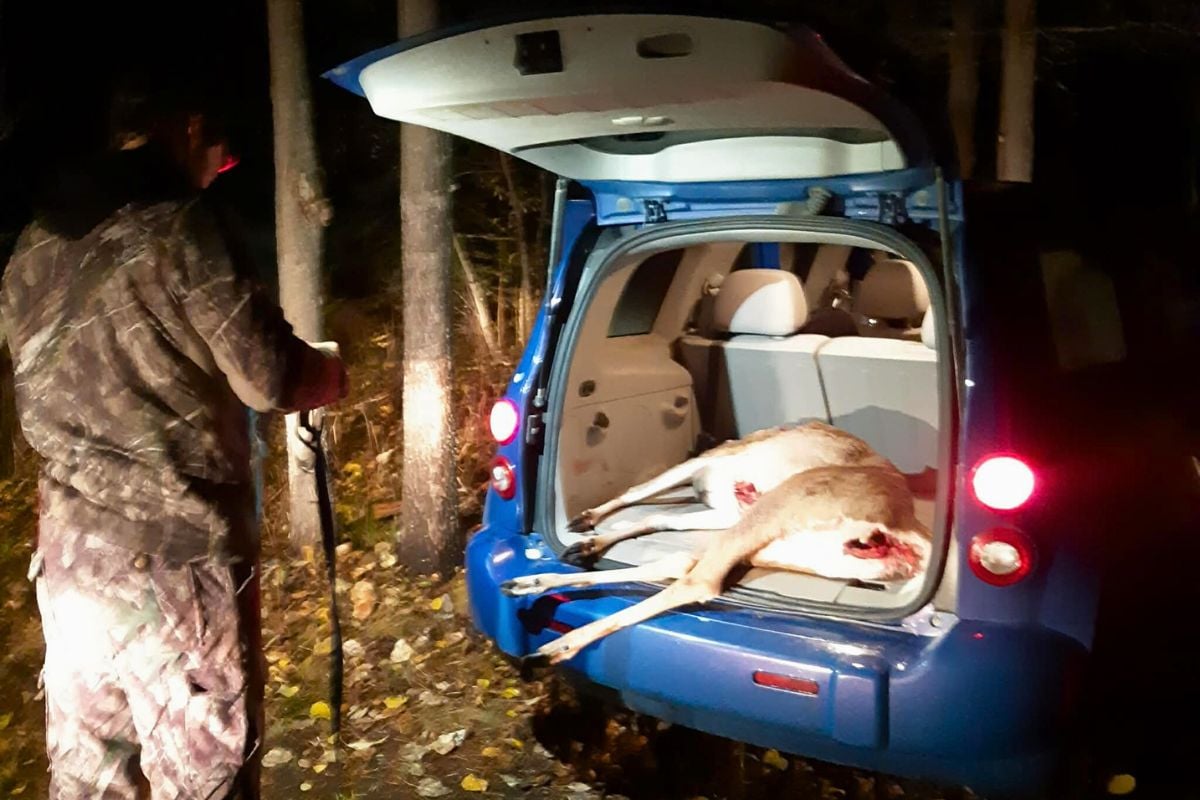
Guess again! Truth is, we sport a mini-van, a HHR and have hauled numerous deer in the back of these vehicles!
Go ahead. You can laugh. We do!
Cost 5: Taking Time Off Work
Not everyone takes time off work to go hunting. However, those who do have to stop and consider something important. When you look at hunting from a financial perspective alone, taking time off work only adds to the price of your meat.
How much money do you make in a day? How many work days did you skip for the sake of hunting? This amount needs to be added to total cost.
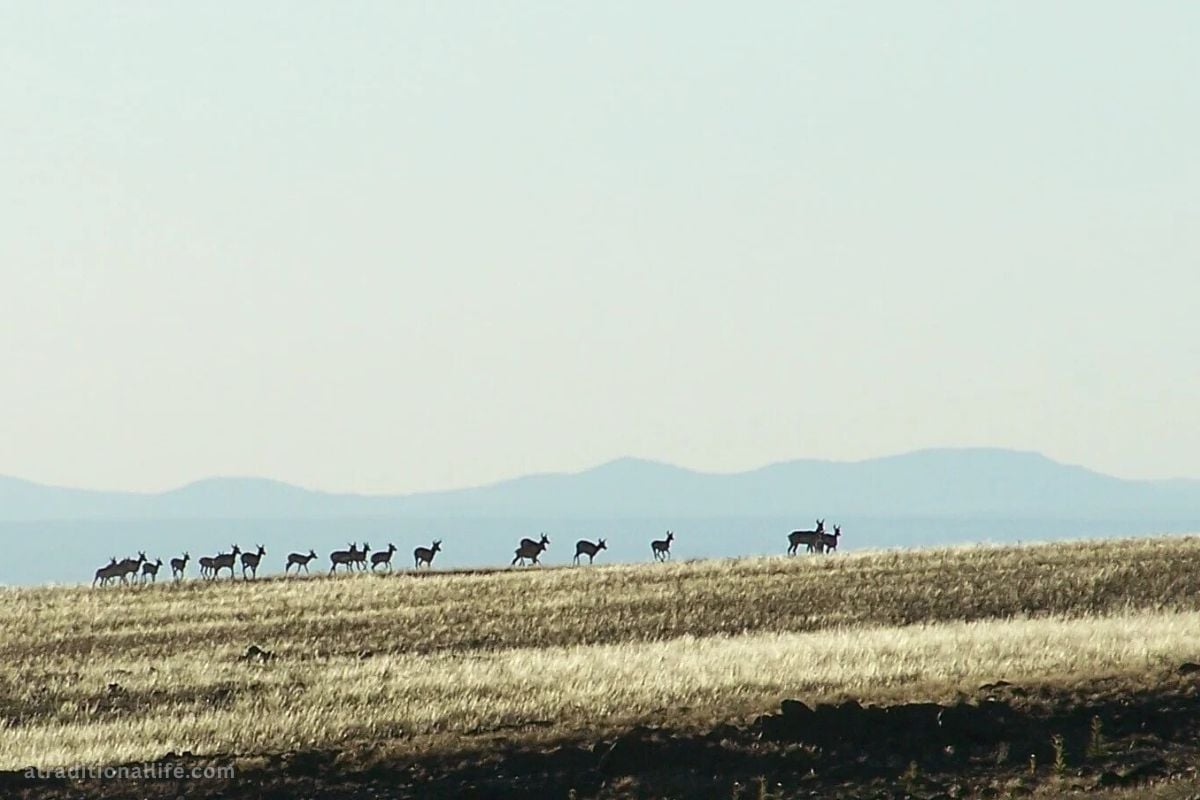
Cost 6: Meat Processing Fees
Even after you harvest an animal, there are still expenses looming on the horizon.
Are you going to let it age and do you have a cool place to hang it?
Will you process the animal yourself?
Do you have (or at least have access to) proper equipment?
If not, what is the cost of having it done at your local butcher shop?
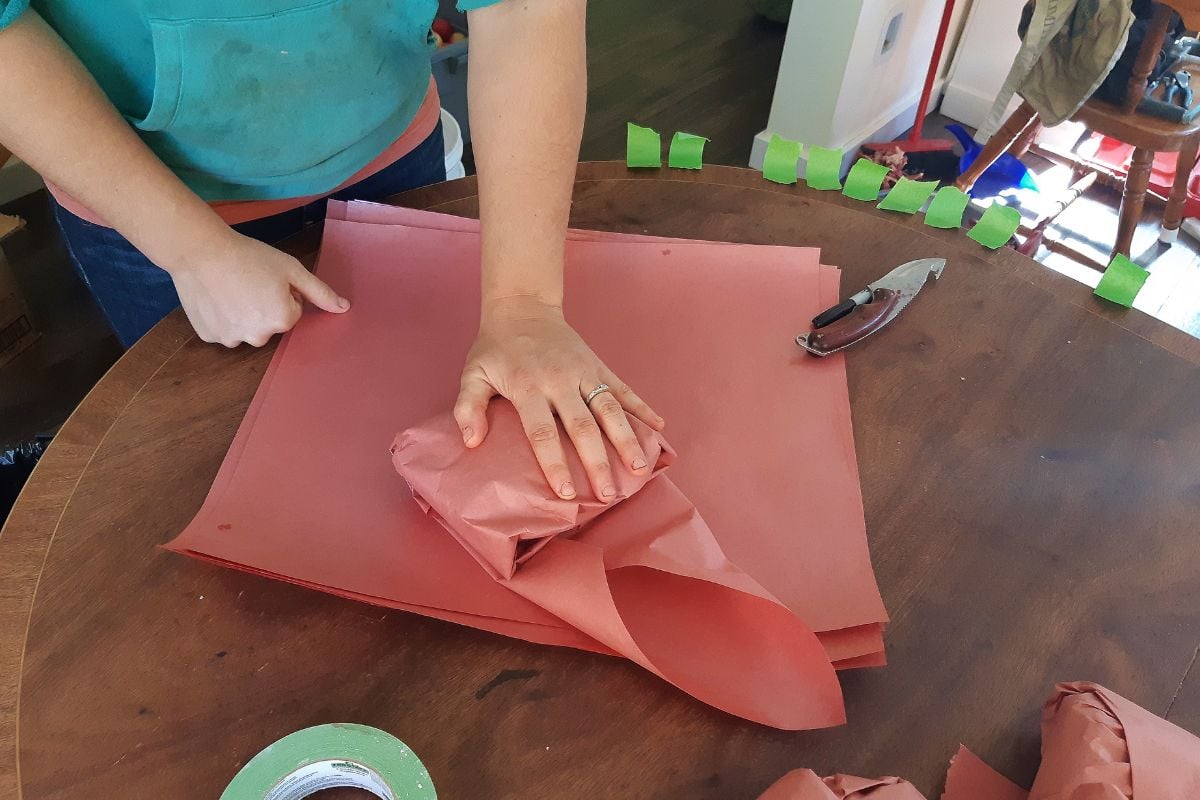
These things affect the actual price of your meat and should be calculated into the final cost!
Are you a hunter who loves to eat? Grab "The Vension Cookbook" by Kate Fiduccia (one of my favorites) and try the roast recipe on pg 23! Its the best!
Charting Your Hunting Expenses
Remember how my man and I were trying to track all our expenses?
We made a simple chart and used it to record our hunting expenses. After a successful season, we carefully weighed our wild game when it was processed and wrapped.
You can get our chart below and use it to track the true cost of your venison.
Get it here: cost of hunting for meat
How to Calculate the Cost of Your Wild Harvested Meat
Locally grown beef cost us about $10 per pound at present date.
Thanks to our chart, we learned that our wild game harvest cost us about $3 per pound!
For us, that's a huge savings every year.
But your story may be different. It's worth running some numbers and see.
I made a blank chart for you, so that you can tracking things yourself.
Get it here: cost of hunting for meat
Did you click on the link? The chart should be found among your downloads. Print, fill it out and then let me know how it goes!
In your situation, is hunting for meat actually cheaper than buying it?


Hi Autumn, thank you so much for this post! It is exactly the information I have been looking for and your chart will come in handy. I have been contemplating homesteading and my wife is all about the bottom dollar and I tend to jump into ideas or projects impulsively so this will put things in perspective for us
Glad it could help. 🙂 Sometimes it's nice to know what something actually costs, instead of just guessing.
Autumn this is a great breakdown of costs. It's neat to see someone doing this so well. But I think you need to find out the cost of the rifle, scope and binoculars and add them to the cost, though maybe amortized over $20 years would make sense for those.
The reason is hat in theory you could have just been gifted meat (lame I know) but that is the opportunity cost of those gifts in this context. :-/
Though speaking of opportunity cost, I suppose you'd also have to include the cost of some other hobby you'd do if you couldn't hunt....
Thanks Steve. I have to wonder if you read this post well or looked at the downloadable hunter's chart. 🙂 In the post itself, I was simply giving a break down of our exact costs for the hunting year 2019. I know not everyone is gifted hunting gear. But we were. In the downloadable chart, I most certainly DO have place to record the expenses of all these things! And hunting will never be free. You'll always have the cost of hunting license, tags, ammo, fuel for travel and butchering costs. As far as hobbies go, I specifically left them out of the equation. Those who hunt as a hobby don't really care about cost; they do it because they enjoy the experience! This post is geared toward people who, (like Jesse and I) are searching for the cheapest way to put meat on the table, who may or may not hunt if there was a cheaper way.